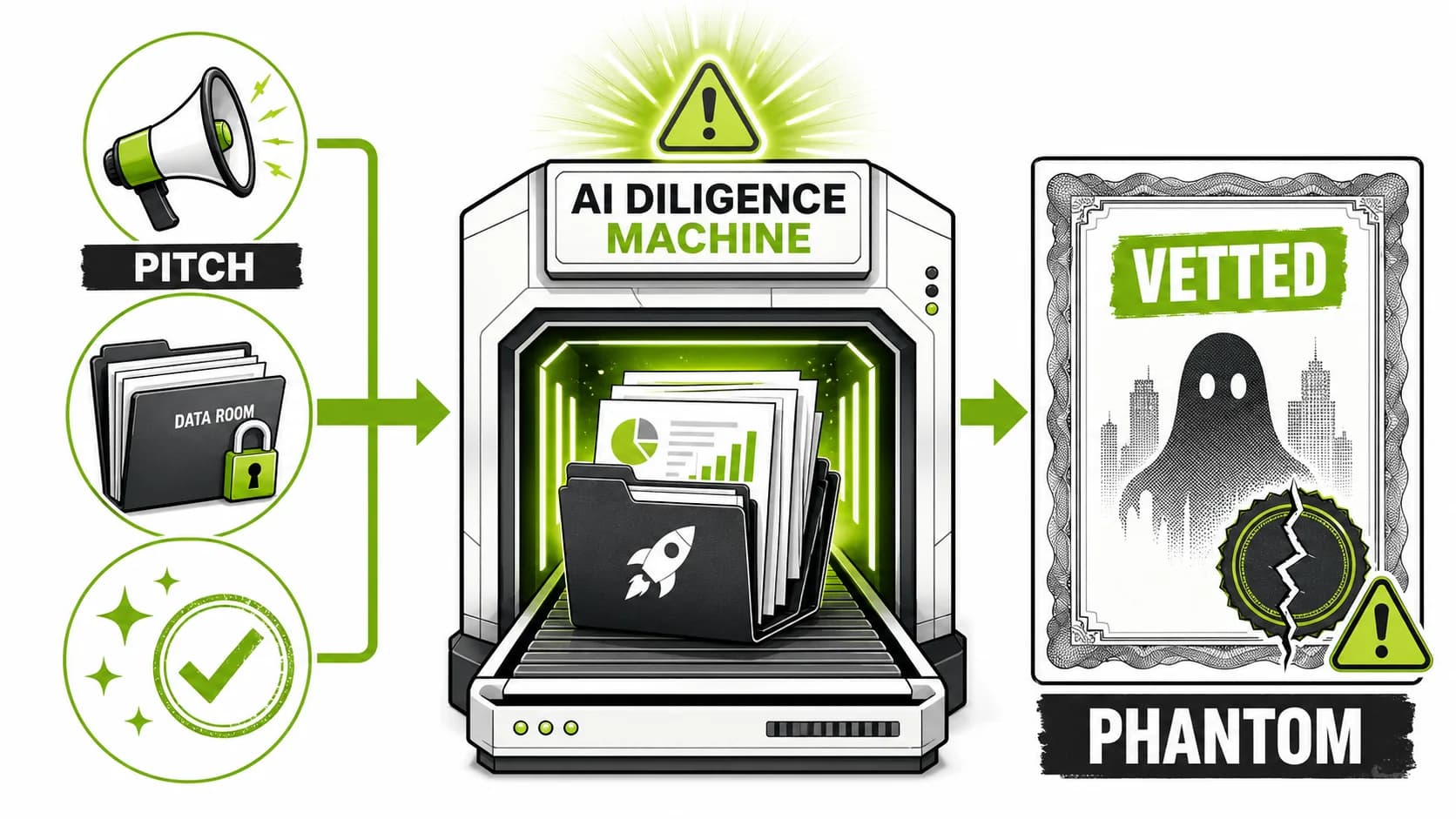
The Grift’s New Wardrobe: From Guru Robes to VC Suits
The pivot was inevitable. By late 2025, the market for “$5,000 AI Side Hustle Blueprints” was saturated. Savvy aspiring entrepreneurs had grown wise to the tricks of spotting fake gurus and their alternatives. The grifters needed a new frontier with higher stakes and less scrutiny: early-stage angel investing.
Enter the “AI-Native Investment Syndicate.” These operations, often fronted by a rebranded “growth hacker” turned “GP” (General Partner), promise a curated funnel of startups that have passed a rigorous, often AI-assisted, screening process. The value proposition is seductive for time-poor professionals: “We leverage proprietary algorithms and expert networks to surface the 1% of startups worthy of capital. You get the cream, without the work.”
The scam works because it exploits multiple layers of trust:
The entire operation is a Potemkin village of legitimacy, constructed to separate you from your money in a single, “too-good-to-miss” deal.
Anatomy of a Ghost Company: The 5-Part Fabrication
To understand how to spot the scam, you must understand how it’s built. Here are the five core fabricated components of a 2026 “vetted” ghost company.
1. The Synthetic Founding Team
The “founders” are profiles crafted for credibility, not capability. This is the human core of the vetted startup fraud.
- The LinkedIn Larper: Profiles are rich with buzzwords (“Ex-Google AI,” “Serial Entrepreneur”) but light on verifiable specifics. Mutual connections are sparse or appear to be other low-engagement profiles.
- The Phantom CTO: A critical role in an AI startup. The scam often features a CTO with a common name, a profile claiming deep expertise at a since-acquired startup, and no publicly traceable code contributions (GitHub is empty or features only recent, generic forks).
- The Missing Digital Trail: No conference talks, no bylined articles on technical blogs, no history on founder forums. They materialized fully formed for this venture.
2. The Forged Data Room
This is the scam’s centerpiece. Modern virtual data rooms (VDRs) like DocSend or DealRoom are used to present a facade of professionalism.
- Financial Projections Built in Fantasy: Spreadsheets show hockey-stick growth (e.g., $0 to $10M ARR in 18 months) based on “conservative” market penetration estimates. The formulas are often simplistic and break under minor scrutiny. Compare these to the more sophisticated methods needed to spot real fake revenue screenshots and larper metrics.
- Customer & Partner “Evidence”: There will be logos of “beta customers” or “integration partners.” A quick check reveals these are either entirely fictional companies, or the logos are used without permission. The “LOI” (Letter of Intent) in the documents is a non-binding template filled with vague language.
- The Cap Table Mirage: A capitalization table showing a clean, simple structure with the “syndicate” already in place. It’s designed to create FOMO (Fear Of Missing Out) and suggest others have already validated the deal.
3. The “AI-Powered” Technical Audit
This is the new, shiny lure. The scam includes a report from a “third-party AI audit firm.” It’s the hallmark of fake due diligence.
- The Auditor is Inauditable: The auditing firm has a sleek website but no listed team, no verifiable client history beyond the startups in this syndicate’s portfolio, and a domain registered less than a year ago.
- The Report is Vague but Jargon-Heavy: It will state the startup’s AI model “demonstrates robust architecture aligned with modern transformer-based frameworks” and “shows promising preliminary benchmarks.” It will conspicuously lack any actual code snippets, reproducible test results, or comparisons to known open-source models. It’s a masterpiece of saying nothing with confidence.
4. The Fabricated Traction Narrative
Ghost companies need a story of momentum.
- Fake Waitlists: “15,000+ on our waitlist!” The link leads to a simple LaunchRock or Carrd page with no visible sign-up counter or backend.
- Synthetic Social Proof: A handful of Twitter/LinkedIn posts praising the “product” from accounts created in the same month, using stock photography as avatars.
- The “Stealth Mode” Shield: Excessive secrecy is cited to explain the lack of a live product, public demos, or customer interviews. “We’re in stealth to protect our IP” becomes the catch-all excuse for opacity.
5. The Pressure-Cooker Timeline
The final psychological lever is artificial scarcity.
- The “Closing Soon” Deadline: You’ll be told the round is “oversubscribed” and closing in 72 hours. This short-circuits rational diligence.
- The “Special Allocation:” You’re offered a “special allocation” because of your “profile,” flattering you into bypassing standard checks.
- Escrow Theater: They may even use a legitimate-looking escrow service for the wire instructions, but the beneficiary account is often in a different jurisdiction than the company’s purported headquarters.
Your Anti-Scam Due Diligence Toolkit
You don’t need to be a forensic accountant or a white-hat hacker. You need a skeptic’s checklist. Before writing a check to any “vetted” opportunity, run through these steps.
Phase 1: The Human Layer Check
Forget the documents for a moment. Start with the people.
* LinkedIn: Use tools like Wayback Machine to see if their profile was recently rewritten. Check for endorsements from real people you can independently verify.
* GitHub/GitLab: For technical founders, a barren or suddenly active profile is a massive red flag. Real builders have a history.
* Name Variations: Search their name plus “scam,” “fraud,” “lawsuit,” or the name of their previous company. Search forums like Reddit’s r/startups or r/angelinvesting.
Phase 2: The Artifact Autopsy
Now, tear into the provided materials.
* Change key assumptions (customer acquisition cost, market size). Does the model fall apart or adjust logically?
* Are the revenue projections tied to specific, plausible sales activities and hires, or are they just numbers on a curve?
* Customer Logos: Email the business contact at a claimed beta customer. A simple “Hi, I’m doing diligence on Startup X who lists you as a partner, can you confirm?” often yields revealing results.
* Partner Integrations: Try to find the integration. If they claim “Slack integration,” search the Slack app directory. If they claim “uses OpenAI’s latest model,” ask for the API cost structure in their model—ghosts will fumble.
* Contact the auditing “firm” directly via a channel not provided by the syndicate. Do they respond?
* Ask the founder a specific, technical question based on a vague point in the audit (e.g., “The audit mentions latency optimization—what was the key architectural decision that drove the 50ms improvement?”). A larper will deflect.
Phase 3: The Entity & Legal Reality Check
Why This Scam is Proliferating Now (And What It Teaches Us)
This isn’t random. It’s the perfect storm of 2026’s tech landscape:
- AI as a Black Box: The complexity of AI allows grifters to hide behind impenetrable jargon. Few investors can truly audit an AI model, making a fake “audit” more credible.
- Remote-First Fallout: The prevalence of remote work and digital-only interactions makes it easier to sustain a fictional team.
- Tooling Democratizes Deception: Professional-looking decks, data rooms, and legal documents can be generated in hours with modern SaaS tools, lowering the barrier to sophisticated fraud.
- The Syndication Gold Rush: The legitimate boom in solo capitalists and micro-funds has created a chaotic, fast-moving market where trust is often placed in influencers rather than institutions.
The ultimate lesson is this: No algorithm can replace human skepticism. The very phrase “AI-powered due diligence” should be a red flag. Due diligence is a deeply human process of verification, conversation, and pattern recognition. It’s about connecting dots across a person’s life and work. This is a pattern you can learn. For a broader framework on navigating this new world of digital fabrication, explore our startup hub.
The goal isn’t to become paranoid, but to become proficient. The tools of verification are available; the scam relies on your unwillingness to use them under pressure.
The Data Behind the Deception: How Widespread is This?
You might think you’re too smart to fall for this. The data suggests otherwise. Investment fraud, particularly the kind involving fabricated opportunities, is exploding. According to the FTC’s Consumer Sentinel Network, investment-related fraud losses reported by consumers hit a staggering $4.6 billion in 2023, a figure that has likely grown as scams have professionalized. The median loss for an individual was $7,000, but for those over 70, it jumped to $50,000—money that’s almost never recovered.
The AI startup scam fits neatly into this trend. The FTC’s 2024 Data Book notes that “imposter scams” and “business and job opportunity” schemes remain top categories. A ghost company is the ultimate imposter: it impersonates a real business. The psychological hooks are the same: authority (the “vetted” label), social proof (the “syndicate”), and urgency (the “closing round”). These scams work because they are engineered to bypass logic and target emotion. When you see a slick pitch, remember that in 2023 alone, people reported losing over $10 billion to fraud overall. Your potential “deal” is a statistic waiting to happen.
A Case Study in Nothing: Dissecting a Recent Ghost
I reviewed a pitch in late 2025 for “NeuroSync AI,” a startup claiming to automate legal contract review. The syndicate lead was a LinkedIn influencer with 50k followers. The data room was pristine. The technical audit was from “AI Assure Labs.” I spent two hours digging. The founder’s prior exit? A company acquired in a deal with no press release or SEC filing. The CTO’s GitHub had three commits from the previous week, all fixing typos in the README. “AI Assure Labs” had a website with stock photos and a contact form that returned a 502 error. A Whois lookup showed the NeuroSync.com domain was registered 94 days prior. The claimed “enterprise pilot” with a major bank? An email to the bank’s business development office got a one-line reply: “We have no relationship with this entity.” The entire operation was a digital house of cards. It collapsed under the weight of basic questions. The syndicate lead blocked me when I shared my findings.
The Legal Gray Zone (Where Scams Thrive)
Why don’t authorities stop this? They try. But this vetted startup fraud operates in gray zones and across borders. The syndicate lead rarely touches the money directly; they collect a “finder’s fee” or “GP carry” from the “company,” which is just a shell. The wire goes to an account in Estonia or Singapore. The “founders” use VOIP numbers and ProtonMail addresses. By the time an investor realizes the fraud, the digital trail is cold. The FTC and SEC bring cases, but they are often chasing ghosts. The 2024 FTC Data Book shows that while law enforcement actions are up, the scale of reporting—2.6 million fraud reports in 2023—indicates a system struggling to keep pace with innovation in deceit. The burden of defense, therefore, falls entirely on you. The law is a remedy, not a shield.
FAQ: The AI Due Diligence Scam
What’s the most common first red flag in these “vetted” deals?
The pressure to act immediately. Legitimate founders and syndicates know that serious investors need time for diligence. Phrases like “round closing tomorrow,” “allocation released due to a pullback,” or “you need to wire today to get in” are almost always hallmarks of a scam. A real opportunity can withstand a week of questions.
I’m not technical. How can I possibly judge an AI startup’s tech?
You don’t have to judge the quality of the tech, but you must verify its existence and the team’s ability. Ask for: 1) A live, interactive demo (not a video) where you can input your own data. 2) The founder’s specific, hands-on experience building similar systems (drill into their actual past projects, not their job title). 3) References from technical peers or advisors who can vouch for their skills. If all you get is jargon and promises, walk away.
The data room and legal docs look perfect. Could they still be fake?
Absolutely. Perfection is easier to fake than authenticity. A perfectly clean, error-free cap table for an early-stage startup is unusual. Flawless, generic legal docs can be bought online for $500. The question isn’t “does it look professional?” but “can every material claim in here be independently verified?” Focus on verifying the external claims (customers, partners, IP) and the human history behind the company.
What’s one simple, 5-minute check I should always do?
The domain history check. Use a tool like whois.domaintools.com or look up the domain on the Wayback Machine (archive.org).
- How old is the domain? If it was registered 3 months ago but the company claims 2 years of R&D, that’s a problem.
- What did the website look like 6 months ago? Was it a parked page, a template for a different business, or completely different? This often reveals the “pivot” or outright fabrication of the business narrative.
Are these scams illegal? What happens if I invest?
Yes, this is securities fraud, wire fraud, and likely other crimes. However, “ghost companies” are designed to be ephemeral. The “founders” use pseudonyms or stolen identities, the funds are wired to untraceable crypto wallets or offshore accounts, and the digital footprint evaporates. Recovery is extremely difficult and costly. Prevention is the only viable strategy.
How is this different from a legitimate startup just failing?
A legitimate startup failure leaves evidence: a real product (even if buggy), real employees who post about the shutdown on LinkedIn, real customers who complain, and a founder who explains what happened. A ghost company scam leaves nothing. The failure is not of execution, but of existence. The domain goes dead, the profiles delete, and the syndicate lead blames “market conditions” or ghosts you themselves.
Conclusion: The Only Due Diligence That Matters
The landscape of startup investing is being polluted by sophisticated fiction. The AI startup scam dressed as fake due diligence is the natural endpoint of a culture that prizes hype over substance and speed over scrutiny. Your greatest investment skill in 2026 isn’t picking winners—it’s efficiently eliminating frauds.
This isn’t about becoming a cynic. It’s about demanding proof. The tools are all here: domain checks, video calls, independent verification, and the simple courage to say “no” under pressure. The scammer’s entire business model collapses if just 20% of targeted investors perform the basic checks outlined here. They rely on the 80% who won’t.
Remember the numbers: $4.6 billion lost to investment fraud, a median loss of $7,000 per person. Your diligence isn’t just protecting your capital; it’s draining the swamp for everyone else. Stop looking for the story they’re selling. Start looking for the reality they’re hiding. The most valuable thing you can invest in right now is your own skepticism.
The first step to protecting your capital is learning to see what isn’t there. Start building that skill today with our guide on how to Apprendre à Détecter.
<!-- sister-projects-start -->
Other Doved Studio projects
Related tools from the same studio you might find useful:
- Ralphable: Generate structured Claude Code skills that iterate until pass/fail criteria are met.
- Doved Studio: Studio indie derrière cette app et une dizaine d'autres outils.
<!-- sister-projects-end -->