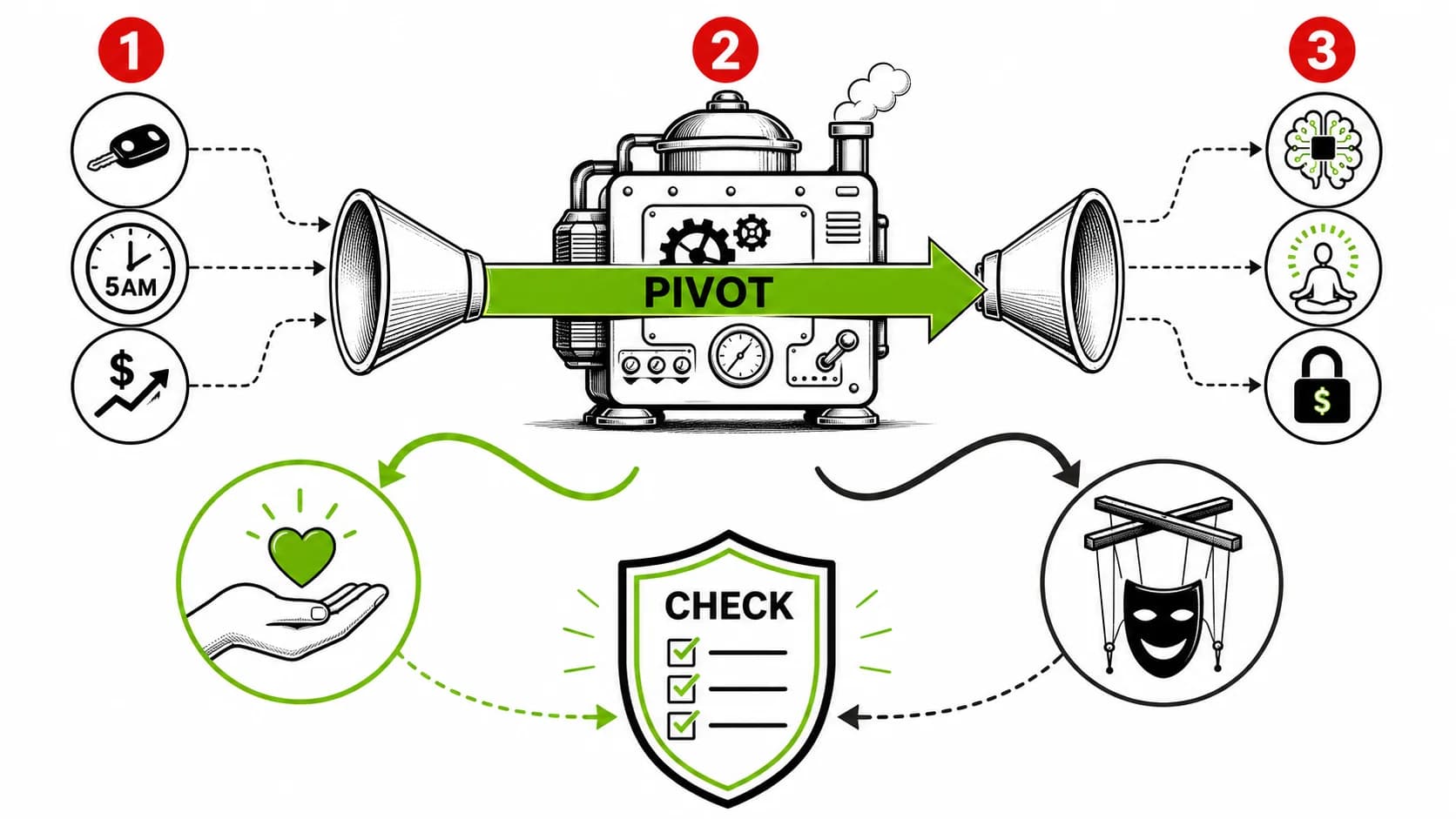
In February 2026, a familiar face from the "hustle porn" circuit of 2023 reappeared on your feed. Gone were the Lamborghini keys and the "5 AM Club" mantras. In their place: a soft-focus video, a gentle voice, and a confession. "The grind broke me," they said, eyes glistening with what looked like hard-won wisdom. "I lost myself chasing a number. Now, I'm building something real—an AI-powered sanctuary for founder minds." The comments section flooded with praise: "So brave." "This is the real work." "Take my money."
Welcome to the latest, and perhaps most insidious, pivot in the guru playbook: the mental health grift.
As recent exposés in outlets like TechCrunch have highlighted, a wave of previously exposed "hustle culture" gurus are rebranding as mindful mentors and wellness tech pioneers. This isn't a coincidence; it's a calculated survival strategy. With public sentiment turning against toxic productivity and founder burnout reaching crisis levels, vulnerability has become the new currency. But when that vulnerability is scripted, the resulting "therapy" is just another form of emotional manipulation, designed to monetize your pain under the guise of healing it.
This article is your guide to detecting when a guru's "mental health journey" is authentic growth or a founder mental health scam. We'll dissect the therapy bot grift, decode the guru vulnerability script, and give you the tools to protect yourself from those selling snake oil for the soul.
The Pivot Playbook: From Hustle to Healing
The pattern is becoming textbook. A guru faces a credibility crisis—perhaps their "seven-figure course" students aren't seeing results, or their revenue screenshots are debunked. The backlash builds. Instead of fading away, they execute The Pivot.
This pivot is brilliantly effective. It disarms critics ("you're attacking someone who's being vulnerable!"), taps into a massive, legitimate market need, and allows the guru to rebrand their entire history. Their past lies become "lessons." Their manipulation becomes "a dark chapter they're helping others avoid."
For a deeper look at this strategic rebranding phenomenon, see our analysis on The AI-Powered Founder's Mental Health Pivot.
Decoding the "Vulnerability Script": 5 Red Flags
Authentic vulnerability is messy, non-linear, and rarely tied to a product launch. Grifter vulnerability follows a script. Here’s how to spot the difference.
1. The Trauma is Vague but Marketable
The guru will share "struggles," but they are often generic enough to be relatable to anyone in business: imposter syndrome, fear of failure, loneliness at the top. What's conspicuously absent are specific, unflattering details that don't serve the narrative. You won't hear about the exact lies they told, the specific people they exploited, or the real financial losses they caused others. The trauma is curated to elicit sympathy, not accountability.
The Grift Tell: If their story of "hitting rock bottom" seamlessly transitions into a pre-order link for their "Healing Founder" mastermind, the vulnerability is a sales funnel.
2. The "AI Therapist" is a Chatbot in a Tuxedo
The therapy bot grift is a masterclass in repackaging. These "AI-powered therapists" or "emotional intelligence coaches" are often glorified rule-based chatbots with a library of pre-written, motivational psychology quotes. They can't provide real therapy, crisis intervention, or nuanced care. They are a product—a SaaS subscription—masquerading as a healthcare service.
Ask These Questions:
- What are the clinical credentials of the team that built the "AI"?
- Is there a clear disclaimer stating it is not a replacement for licensed therapy?
- Does it have established protocols for escalating users in crisis to human professionals?
- (Spoiler: The answer is usually "no.")
3. The Timeline is Too Convenient
Authentic mental health work is slow. Recovery isn't linear. Yet, the guru's timeline is suspiciously neat: Q4 2025: exposed as a fraud. January 2026: silent retreat. February 2026: "healed" and launching a $5K/year wellness app. This suggests the "journey" was a PR strategy, not a personal process. The healing is presented as complete, positioning them as the cured expert ready to guide you.
4. The Language is Co-Opted from Real Therapy
Listen for the buzzwords: trauma-informed, shadow work, inner child, somatic experiencing, nervous system regulation. When used by a credentialed professional, these are powerful frameworks. When used by a guru with a weekend certification, they are often weaponized to create a false sense of clinical authority and to pathologize normal entrepreneurial stress, making you feel you need their product to be "fixed."
5. The Community is an Echo Chamber of Paid Praise
Scroll through the comments on their launch post. You'll likely find an overwhelming wave of support from other "reformed" gurus, high-paying members of their old masterminds, and new accounts that suspiciously only praise this one person. Dissenting questions are deleted or met with gaslighting responses like "Your skepticism is a reflection of your own unhealed wounds."
This pattern of constructing a believable, yet entirely fabricated, persona is what we call The Authentic Grift.
The Real Danger: Emotional Debt and Weaponized Empathy
Why is this grift more dangerous than selling a bogus crypto course?
How to Protect Yourself: The Larpable Detection Kit
Before you invest a single dollar or ounce of emotional energy into a guru's new wellness venture, run them through this checklist.
| What to Look For | Grift Indicator | Authenticity Indicator |
|---|---|---|
| Credentials | "Certified" by unaccredited online institutes. Vague titles like "Transformation Guide." | Licensed therapists (PhD, PsyD, LCSW), board-certified coaches (ICF), or transparent about the AI's limits. |
| Transparency | No mention of the team, clinical advisors, or tech stack. Vague about past controversies. | Clear "About Us" page with team bios. Open about the product's capabilities and limitations. |
| Monetization | High-ticket "healing" packages sold immediately after a "vulnerable" story. Subscription locks you in. | Transparent, reasonable pricing. Free resources or trials. Clear path to cancel. |
| Crisis Management | No clear terms of service or crisis resources. Chatbot gives generic "hang in there" messages. | Prominent links to real crisis hotlines (988, etc.). Clear protocol for human intervention. |
| Community Vibe | Cult-like praise. Questions are shut down. Focus on the guru as a savior figure. | Balanced discussions. Tolerance for criticism. Focus on shared learning, not idol worship. |
The Ultimate Test: The "Why Now?" Question.
Ask yourself: Is this person sharing their journey to connect and help, or to sell? Is the product a consequence of their healing, or is the healing a prelude to the product? If the business model was built before the "breakdown" was shared, you're likely looking at a script.
Arming yourself with these detection skills is the first step. To systematically learn how to audit any online figure's claims, from revenue to resilience, explore our core guide on Apprendre à Détecter.
What Does Legitimate Founder Mental Health Support Look Like?
Amidst the noise, real, ethical support exists. Here’s what to seek out:
- Licensed Professionals Working with Entrepreneurs: Therapists who specialize in high-performance individuals, startup stress, or career counseling. They are regulated by state boards and have a duty of care.
- Evidence-Based Peer Support Groups: Non-profit groups or moderated communities (like certain Y Combinator or EO forums) where sharing is not monetized.
- Transparent Tech with Clinical Backing: Apps like Headspace or Calm are clear about being wellness tools, not therapy. Emerging ethical "therapy aid" apps will prominently feature their clinical research and advisory boards.
- Free, Credible Resources: Materials from established institutions like the American Psychological Association or peer-reviewed studies on entrepreneur mental health provide a foundation without a sales pitch.
Conclusion: From Burnout to Bullshit Detection
The surge in #FounderTherapy content is a double-edged sword. On one side, it signifies a vital, long-overdue conversation about the psychological toll of building. On the other, it has created a gold rush for bad actors to repackage their grift in the language of healing.
Your skepticism is not cynicism; it is a necessary immune response. In 2026, the most valuable skill for an entrepreneur isn't just resilience—it's discernment. The ability to separate genuine human growth from a guru vulnerability script will protect not just your wallet, but your well-being.
The next time you see a fallen guru rise from the ashes with a therapist's vocabulary and a new app, pause. Remember the pivot playbook. Check for the red flags. Look for the real practitioners doing the quiet, unglamorous work of actual support. Your mental health is too important to be another guru's growth hack.
For more patterns, tactics, and deep dives into the world of entrepreneurial authenticity, visit our main Entrepreneurship Hub.
FAQ: The Founder Mental Health Grift
1. What's the difference between a founder sharing mental health struggles and a guru executing a "vulnerability pivot"?
The key difference is intent and integration. A founder sharing authentically does so to connect, reduce stigma, or share lessons learned; the struggle is the point, and any business they run is separate. In a vulnerability pivot, the struggle is a prelude to a sale. The story is curated, the "healing" is suspiciously rapid and complete, and it directly justifies launching a new, high-ticket product aimed at solving the very problem they just "overcame."
2. Are all AI mental health tools scams?
No. The field of digital mental health (often called "Digital Therapeutics") is real and growing, with serious companies conducting clinical trials. The therapy bot grift specifically refers to tools launched by individuals with no clinical background, using "AI" as a marketing buzzword for a simple chatbot, with no safeguards, disclaimers, or evidence of efficacy. Always look for clinical validation, licensed oversight, and clear terms of service.
3. I think I've been scammed by one of these "mindful guru" programs. What should I do?
First, be kind to yourself. These schemes are designed to be convincing. Your priority should be your well-being:
- Cease Engagement: Stop consuming their content and leave their communities to break the psychological hold.
- Seek Legitimate Support: Consider speaking with a licensed therapist to process the experience.
- Financial Action: If possible, cancel subscriptions and dispute charges with your bank or credit card company if services were not as advertised.
- Warn Others: Consider sharing your experience (factually, without drama) to help others avoid the same trap.
4. Why is this grift so effective right now?
It's a perfect storm: Cultural Shift (peak awareness of burnout/mental health), Guru Necessity (the "hustle" brand is toxic, forcing rebranding), and Technological Window Dressing (AI sounds sophisticated enough to fake therapeutic authority). It exploits a genuine, painful need with a superficially plausible solution.
5. How can I vet a coach or therapist who specializes in founder issues?
Ask direct questions:
- "What are your specific credentials and licenses?"
- "What is your training and experience in working with entrepreneurs?"
- "What is your therapeutic or coaching methodology?"
- "Can you provide references or testimonials from past clients?"
6. Is it ever okay for a business coach to discuss mental health?
Yes, but within strict boundaries. A good coach can help you build resilience, manage stress, and develop healthy work habits. They should, however, be able to clearly articulate the line between coaching and therapy, and must refer clients to a licensed mental health professional when issues like clinical depression, anxiety disorders, or trauma arise. A red flag is a coach who claims to "heal your trauma" or diagnose you without a clinical license.
<!-- sister-projects-start -->
Other Doved Studio projects
Related tools from the same studio you might find useful:
- Ralphable: Generate structured Claude Code skills that iterate until pass/fail criteria are met.
- Doved Studio: Studio indie derrière cette app et une dizaine d'autres outils.
<!-- sister-projects-end -->