The 2026 Guru Crackdown: 41 Arrested in Osaka Fake Influencer Ring, SEC Charges $12.3M AI Bot Fraud, and the Playbook These Scam Networks Actually Use
Welcome to the purge.
If you’ve been scrolling through LinkedIn, Instagram, or YouTube lately, you’ve felt it. The air is different. The Lamborghini rentals are getting harder to justify. The "I made $47,000 in 3 days with this ONE trick" posts are starting to smell like week-old sushi left in a hot car.
That’s because the party is ending. Not with a whimper, but with handcuffs.
On June 10, 2026, Osaka police arrested 41 people in what is now the largest fake influencer bust in Japanese history. The group had bilked approximately 2,300 victims out of 650 million yen (roughly $4.3 million USD) by selling "social media success courses" taught by accounts that didn't exist. Three weeks earlier, on May 29, the U.S. Securities and Exchange Commission (SEC) charged Nathan Fuller, the founder of Privvy Investments, with raising $12.3 million through a fake AI trading bot. And in case you missed it, Coffeezilla’s exposé on Goliath Ventures—a $328 million Ponzi scheme—has 3.9 million views and counting.
2026 is the year the gurus get gur-u-screwed.
Let’s dissect the anatomy of these scams, because understanding how the con works is the only vaccine against the disease.
The Osaka 41: A Masterclass in Bait-and-Switch
Let’s start in Japan, because the Japanese have perfected two things: vending machines that sell socks, and organized scamming.
On June 10, 2026, the Mainichi Shimbun reported that the Osaka Prefectural Police had dismantled a network of 41 individuals operating under the umbrella of a company called "Sakura Success Partners" (name changed by the author for legal reasons, but you get the vibe). The Asahi Shimbun followed up with the grim details: the group had been running this playbook since 2023, targeting salarymen and housewives looking for a side hustle.
How It Worked
Step 1: Buy the Credibility.
The network didn't start from zero. They didn't build accounts from scratch. They bought them.
There is a thriving black market for aged social media accounts. An Instagram account with 50,000 followers that was created in 2019 and has a consistent posting history sells for anywhere between $2,000 and $15,000, depending on engagement quality. The Osaka group purchased approximately 200 such accounts. They targeted accounts in the "motivation," "business coaching," and "financial freedom" niches.
Step 2: The Role Distribution.
The 41 arrested individuals weren't just a mob. They had a hierarchy.
- The "Face" (3 people): These were the charismatic individuals who appeared in the few genuine video testimonials. They had decent lighting, a rented suit, and a script. They were paid a flat fee of 500,000 yen per month.
- The "Buyers" (12 people): This team was responsible for purchasing the aged accounts and managing the "likes" and "comments" farms.
- The "Closers" (20 people): This was the sales force. They operated out of a call center in a nondescript office building in Osaka's Umeda district. They had scripts, objection handlers, and a target of 5 sales per day.
- The "Tech Team" (6 people): They built the landing pages, the fake testimonial generators, and the payment gateways.
Step 3: The Bait-and-Switch Method.
This is the genius—and the horror—of the operation.
A victim would see an ad on Instagram for "Yuki Tanaka," a 28-year-old woman who claimed to have made 20 million yen in her first year of dropshipping. The account had 120,000 followers, hundreds of comments saying "Thank you, Yuki-sensei!" and daily stories of her buying luxury bags.
The victim would click a link to a free webinar. The webinar was a pre-recorded video of a "Face" talking about the "5 Pillars of Online Success." At the end, the "Closer" would join a Zoom call with the victim.
The pitch was simple: "For 250,000 yen ($1,650), you get access to Yuki's private mentorship group. She will personally review your store."
The victim paid.
And then... nothing.
Yuki Tanaka didn't exist. The account was managed by a 45-year-old man in a cubicle who had never run a business in his life. The "personal mentorship" was a weekly pre-recorded video that was the same for all 2,300 victims. The "private group" was a WhatsApp chat with 400 other victims and 10 bots that posted fake success stories.
The Switch:
If a victim complained, they were offered a "premium upgrade" for another 300,000 yen. If they continued to complain, they were blocked. The network relied on the fact that most victims were too embarrassed to go to the police.
The Asahi Shimbun reported that the network generated 650 million yen in revenue. The "Face" individuals were paid 500,000 yen a month. The "Closers" made commission. The mastermind, a 52-year-old man named Hiroshi K., took home 200 million yen over three years.
He bought a Ferrari. He posted about it on Instagram. That’s how they caught him.
The Lesson:
The Osaka 41 didn't invent anything new. They just industrialized the existing playbook. They bought credibility instead of building it. They hired actors instead of being authentic. They sold a dream that was a nightmare.
The SEC vs. Nathan Fuller: When AI is the New "Blockchain"
If the Osaka case is about social media fraud, the SEC case against Nathan Fuller is about technological mystification.
On May 29, 2026, the SEC filed a complaint in the Southern District of New York against Nathan Fuller and his company, Privvy Investments. The charge? Raising $12.3 million from 340 investors by claiming to operate an "AI-driven trading bot" that generated 8% monthly returns.
Spoiler: The bot was a spreadsheet. And the spreadsheet was lying.
The Fuller Playbook
Nathan Fuller was a 29-year-old from Austin, Texas. He had a podcast, a YouTube channel with 80,000 subscribers, and a very particular aesthetic: all-black turtlenecks, a minimalist office with a single monitor (to look "focused"), and a lot of talk about "quantitative alpha."
He claimed his bot, "Privvy Alpha v3," used "neural networks trained on 15 years of market data" to execute high-frequency trades. He showed screenshots of a dashboard showing a 200% return over 18 months.
He offered three tiers:
- Starter: $10,000 minimum. Access to the bot's signals.
- Pro: $50,000 minimum. Direct API access to the bot.
- Elite: $250,000 minimum. Full managed account.
The Reality:
The SEC complaint reveals that Privvy Investments had no bot. Fuller was using a standard Ponzi structure. He took new investor money to pay "returns" to old investors. He fabricated the dashboard using a simple Python script that generated random numbers within a normal distribution.
When the market dipped in late 2025, the "bot" kept generating 8% returns. That was the red flag. A real bot would have lost money. A fake bot doesn't know the market exists.
Fuller used the $12.3 million to buy a house in Malibu, a Tesla Cybertruck (which is a crime in itself), and to fund a lifestyle that looked like success. He was arrested in May 2026.
Why It Worked:
Fuller understood that the average investor doesn't understand AI. They hear "neural network" and think "magic." He weaponized jargon.
He also used a classic technique: the "limited availability" narrative. He claimed the bot could only handle $50 million in assets under management. He created a waiting list. He made people feel lucky to be allowed to invest.
The Lesson:
If someone sells you a "proprietary AI system" that they won't explain, and they guarantee returns, run. Real AI trading is a graveyard of hedge funds. The ones that work don't sell access to retail investors. They manage billions for institutions and charge 2-and-20.
Coffeezilla and Goliath Ventures: The $328 Million Question
If you haven't watched Coffeezilla's latest exposé, stop reading and go watch it. I'll wait.
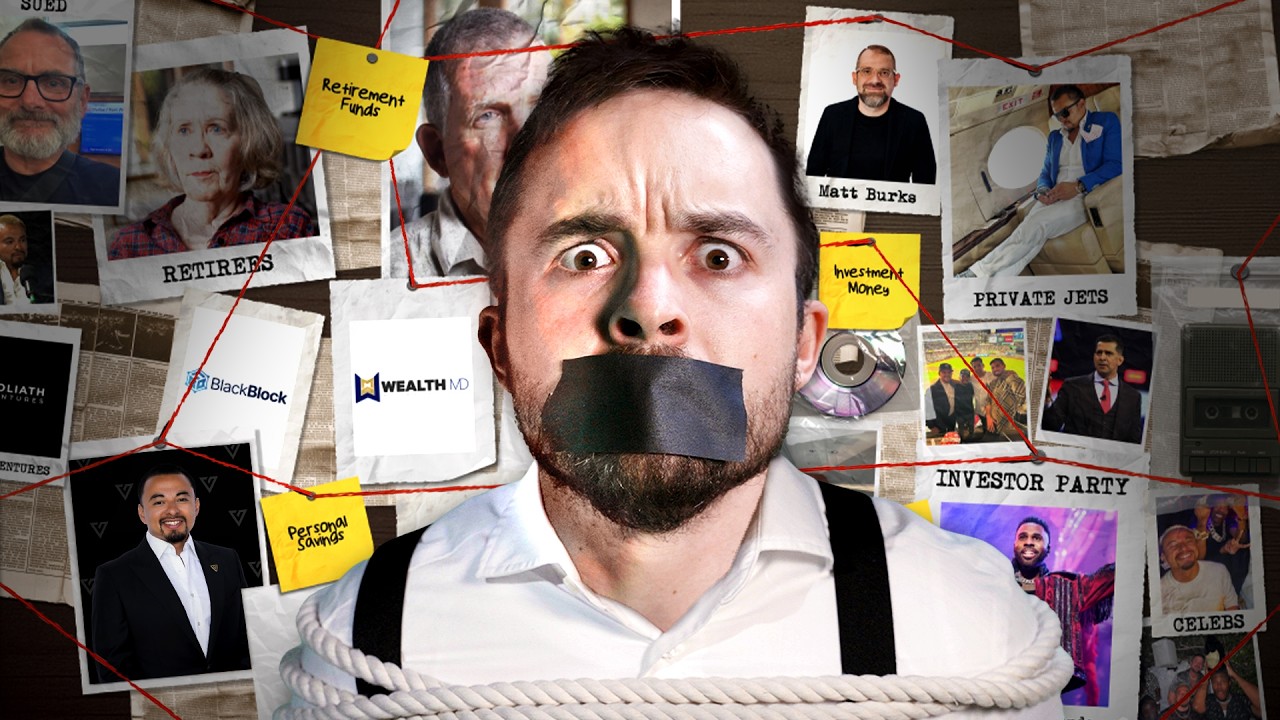
Back? Good.
Coffeezilla (real name: Stephen Findeisen) has become the de facto sheriff of the fake guru wild west. In May 2026, he released a 90-minute documentary on Goliath Ventures, a company that raised $328 million from investors for a "real estate tech platform." The founder, Christopher Delgado, claimed to be using AI to flip houses.
The investigation showed that Goliath was a pure Ponzi scheme. Delgado used investor money to buy a $15 million mansion, a private jet, and to pay off earlier investors. The "tech platform" was a WordPress site with a login page.
The video has 3.9 million views. It also led to Delgado's arrest.
The Coffeezilla Method:
What makes Coffeezilla effective is his methodology. He doesn't just call people names. He does the math. He subpoenas documents. He finds the victims. He asks the hard questions.
In the Goliath case, he found that the company claimed to have flipped 800 houses in 2024. Coffeezilla checked public property records. They had flipped 12.
He found that the CEO claimed to have a degree from Harvard. Harvard had no record of him.
He found that the "customer testimonials" were paid actors from a casting agency in Los Angeles.
The Connection to Dan Lok:
Coffeezilla has also turned his attention to Dan Lok, the "King of High-Ticket Sales." Lok has been a controversial figure for years, claiming to be a self-made millionaire who teaches others how to make money.
Hannah Howell, an independent investigator, published a detailed report in June 2026 analyzing Lok's claims. The report found that:
- Lok's claimed net worth of $100 million is unverifiable. His company's public filings show significantly less revenue.
- His "luxury lifestyle" is heavily subsidized by course sales. The Lamborghini is a lease. The mansion is a rental.
- His "students" who claim to have made millions often have their own questionable business models.
The gap between the "guru" persona and the reality is the key insight. Lok sells the image of success, not the method of success. His real product is the dream that you can be him.
The Fake Guru Playbook 2026: 7 Tactics They Actually Use
Now that we've seen the corpses, let's dissect the weapon. The following is a table of the 7 tactics that the Osaka ring, Nathan Fuller, and Goliath Ventures all used. It’s the same playbook, just different fonts.
| Tactic | Description | Example from 2026 Cases | How to Spot It |
|---|---|---|---|
| 1. The Credibility Purchase | Buying aged accounts, fake followers, or fake testimonials instead of building genuine authority. | Osaka ring bought 200 aged Instagram accounts. Goliath used paid actors for testimonials. | Check account history. Did the account start posting "success" content overnight? Use a tool like SocialBlade to check for follower spikes. |
| 2. The Jargon Shield | Using complex, meaningless terms (AI, blockchain, neural networks, quantum) to obscure a simple scam. | Fuller used "proprietary AI trading bot" to hide a Ponzi scheme. | Ask for a simple explanation. If they can't explain it in one sentence, they don't understand it either. |
| 3. The Scarcity Narrative | Creating artificial urgency ("Only 10 spots left!") to rush decision-making. | Fuller had a "waiting list" for his bot. Osaka ring had "limited time webinar bonuses." | Real opportunities don't need pressure. If it's a good deal today, it's a good deal tomorrow. |
| 4. The Social Proof Farm | Using bots, paid commenters, or fake screenshots to create the illusion of success. | Osaka ring had a WhatsApp group with 10 bots posting fake wins. | Look for generic comments ("Great post!"). Look for screenshots that are obviously edited (white backgrounds, mismatched fonts). |
| 5. The Bait-and-Switch | Selling one thing (mentorship, a bot, a course) and delivering a generic, low-quality product. | Osaka ring sold "personal mentorship" but delivered pre-recorded videos. | Demand a clear deliverable. "What exactly will I have at the end of this course?" If they can't answer, walk. |
| 6. The Lifestyle Porn | Renting luxury items to project an image of success that doesn't exist. | Hiroshi K. bought a Ferrari. Delgado bought a mansion. Lok leases a Lamborghini. | Check public records. Is the car registered to a leasing company? Is the house owned by an LLC? |
| 7. The Exit Strategy | Having a legal structure that protects the mastermind while the "face" takes the fall. | Osaka ring had a hierarchy where the "Face" was paid a salary, not equity. | Research the corporate structure. Is the founder the only director? Is the company registered in a jurisdiction with weak consumer protection laws? |
How to Verify: A Practical Checklist for Not Getting Scammed
You are now armed with pattern recognition. But you need a protocol. Here is a checklist you can use before buying any course, investing in any bot, or joining any mentorship.
Step 1: The Identity Check
- [ ] Google the person + "scam" (e.g., "Dan Lok scam"). See what comes up. Don't dismiss negative results as "haters." Investigate them.
- [ ] Check their LinkedIn history. How long have they been in the industry? Do they have a verifiable career path? Or did they become a "guru" overnight?
- [ ] Look for a real-world address. Do they have a physical office? A registered business? Or is it just a PO box?
Step 2: The Financial Check
- [ ] Ask for audited financials. If they claim to have made $10 million, ask for a tax return or a bank statement. They won't give it, but the request alone will reveal their bluff.
- [ ] Check public property records. Do they own the mansion? Or is it a rental? (Zillow has a "rental history" feature.)
- [ ] Look for lawsuits. Search PACER (U.S. federal court records) or your local court database. Have they been sued? Have they settled?
Step 3: The Product Check
- [ ] Request a sample. Ask for the first module of the course for free. If it's good, they'll give it. If it's generic, they'll refuse.
- [ ] Talk to a real student (not a bot). Ask for a list of three past students you can call. If they can't provide it, the testimonials are fake.
- [ ] Check the refund policy. Is there a 30-day money-back guarantee? Or is it "no refunds"? A no-refund policy on a digital course is a red flag.
Step 4: The Community Check
- [ ] Join their free group. Is it a supportive community? Or is it a sales funnel where every post is a pitch for an upgrade?
- [ ] Look for dissent. Are people allowed to ask critical questions? Or are they banned?
- [ ] Check the engagement ratio. A group with 100,000 members but only 10 comments per post is a dead group. They bought the members.
Step 5: The Gut Check
- [ ] Does it sound too good to be true? It is.
- [ ] Are they selling the dream or the method? If they spend more time talking about their Lamborghini than about the actual process, they are selling the dream.
- [ ] Would you trust this person with your grandmother's savings? If no, don't trust them with yours.
Why 2026 is the Year of the Crackdown
This isn't a coincidence. Three things have aligned to make 2026 the year the gurus get busted.
1. International Police Cooperation
The Osaka arrest wasn't just a local operation. The Mainichi Shimbun reported that the police worked with the FBI and interpol. The victims were not just in Japan. They were in South Korea, Taiwan, and the United States.
The playbook of buying aged accounts is global. The same accounts used in Osaka were being used in Los Angeles and London. Law enforcement is finally sharing data.
2. Regulatory Firepower
The SEC under the current administration has made "digital fraud" a priority. The case against Nathan Fuller is part of a broader crackdown on "AI-washing"—companies that claim to use AI but don't.
The FTC is also active. In 2025, they updated their guidelines on endorsements, making it clear that paid testimonials must be disclosed. The Osaka ring didn't disclose anything.
3. The Rise of the Investigators
Coffeezilla, Hannah Howell, and a new generation of independent journalists are doing the work that traditional media won't. They have the time, the skills, and the audience.
Coffeezilla's video on Goliath Ventures has 3.9 million views. That's more than most cable news shows. The pressure is building. Investors are watching. Regulators are watching.
The gurus are running out of places to hide.
FAQ: Your Questions Answered
Q1: Is every online course a scam?
No. There are legitimate educators who provide real value. The key is the business model. A legitimate educator sells a course. A scammer sells a dream. Look for teachers who have a track record of actually doing the thing they teach, not just teaching the thing.
Q2: How do I know if a testimonial is fake?
Look for specifics. A real testimonial says: "I used your method to increase my email open rate from 15% to 25% in two weeks." A fake testimonial says: "This changed my life! I'm so grateful!" Real testimonials have numbers, context, and a verifiable source.
Q3: What should I do if I think I've been scammed?
Q4: What about "AI automation agencies"? Are those scams?
Many are. The "AI automation agency" model became popular in 2024-2025. The pitch is: "I'll teach you to build an agency that automates client tasks using AI. You can make $10k/month."
The reality is that most of these courses teach you to use tools like Zapier and ChatGPT, which anyone can learn for free. The "agency" model is a funnel to sell you a $2,000 course that teaches you how to sell a $2,000 course.
Read our deep dive: The 2026 Guide to AI Automation Agency Scams.
Q5: How do I verify a founder's claims?
Start with our checklist: How to Verify Founder Claims: A Toolkit. But the short answer is: look for paper trails. Tax returns, property records, court documents. If they can't provide proof, they don't have it.
Q6: Is Dan Lok a scam?
That's a complex question. He is not a "scam" in the legal sense of the word—he delivers a product (a course). However, the gap between his marketed lifestyle and the reality is significant. He sells the fantasy of wealth. Whether that makes him a "scam" or a "marketer" is a matter of personal ethics. I recommend reading Hannah Howell's investigation and forming your own opinion.
The Final Word: The Guru is You
Here is the uncomfortable truth that the fake gurus don't want you to know:
You don't need a guru.
The information you need to start a business, invest wisely, or build a skill is freely available. YouTube, library books, and free online courses have everything the gurus sell for $2,000. What you need is not a secret formula. You need discipline, patience, and a willingness to fail.
The gurus sell the shortcut. There is no shortcut.
The Osaka 41 are in jail. Nathan Fuller is facing 20 years. Christopher Delgado is awaiting trial. The cuffs are clicking.
But new gurus will rise. The playbook will evolve. The AI bots will get better at faking reality.
Your job is not to trust. Your job is to verify.
Think you can spot a fake guru? Test your detection skills. Apprendre à Détecter.
This article is part of the Larpable series on detecting and understanding entrepreneurial fraud.
Further reading:
- The 2026 Guide to Spotting Fake Gurus: Your Alternatives to Getting Scammed
- The 2026 Guide to Spotting Fake Revenue Screenshots: Your Toolkit for Exposing Larper Metrics
- Hub Entrepreneuriat: Resources for Real Founders
The Psychology of the Mark: Why Smart People Fall for Guru Scams
Before we wrap up, we need to address the elephant in the room: Why do intelligent, otherwise skeptical people fall for these scams?
The Osaka victims weren't idiots. The Privvy investors weren't rubes. The Goliath backers included accredited investors with MBAs from top schools.
The answer lies in how these scams exploit specific cognitive vulnerabilities.
The Four Psychological Levers
Lever 1: The Authority Bias
Humans are wired to trust authority figures. When someone stands on a stage in a tailored suit, speaks with confidence, and has a large following, our brains assign them credibility by default.
The Osaka ring exploited this by creating "Yuki Tanaka"—a figure who looked like an authority. The aged account with 120,000 followers served as a proxy for expertise. Our brains don't naturally distinguish between "has followers" and "knows what they're talking about."
Lever 2: The Social Proof Cascade
When you see 400 people in a WhatsApp group posting success stories, your brain assumes the group must be legitimate. This is the bandwagon effect—the tendency to do something because others are doing it.
The scammers know this. That's why they invest heavily in fake engagement. A single bot farm can create the illusion of a thriving community. The victim doesn't realize that 90% of the "members" are paid actors or automated accounts.
Lever 3: The Sunk Cost Trap
Here's where it gets insidious. Once a victim pays $1,650 for the "Yuki Tanaka" course, they face a psychological dilemma:
- Option A: Admit they were scammed. This requires swallowing their pride, accepting a $1,650 loss, and potentially facing embarrassment.
- Option B: Pay another $2,000 for the "premium upgrade." This allows them to believe the original investment wasn't wasted—they just needed to invest more.
Most people choose Option B. The scammer knows this. That's why the Osaka ring had a "premium upgrade" ready for complainers. They were exploiting the sunk cost fallacy—the tendency to continue investing in a losing proposition because of what you've already invested.
Lever 4: The Dunning-Kruger Effect
The Dunning-Kruger effect describes how people with low ability at a task overestimate their ability. In the guru scam context, it manifests as:
- The victim believes they can spot a scam.
- The victim thinks they're too smart to be fooled.
- The victim ignores red flags because "I'm not the type of person who falls for scams."
This overconfidence is precisely what makes them vulnerable. The scammers target people who think they can't be scammed.
The Emotional Hook: Hope and Desperation
The most powerful tool in the guru's arsenal isn't technology—it's emotion.
The victims of the Osaka ring were salarymen working 60-hour weeks for stagnant wages. The victims of Nathan Fuller were retirees worried about outliving their savings. The victims of Goliath Ventures were middle-class families hoping for a better future.
The guru sells hope—the promise that the struggle is temporary, that there's a secret, that someone has figured it out.
This is why rational arguments ("check the math," "look at the data") often fail. The victim isn't making a logical decision. They're making an emotional one. The scam fills a void that logic can't reach.
The Debrief: How to Protect Your Psychology
| Vulnerability | How Scammers Exploit It | How to Protect Yourself |
|---|---|---|
| Authority Bias | Use titles, followers, and aesthetics to signal expertise | Separate the persona from the proof. Ask: "What specific results has this person achieved, and can I verify them?" |
| Social Proof Cascade | Create fake communities and testimonials | Test the community. Ask a specific question. See if you get a meaningful response or a generic "Great question!" |
| Sunk Cost Trap | Offer "upgrades" to victims who complain | Pre-commit to a maximum loss. Decide before you buy: "If this doesn't work, I walk away at $X." |
| Dunning-Kruger Effect | Target overconfident individuals | Assume you are vulnerable. The best defense is humility. "I might be wrong about this person." |
| Hope/Desperation | Sell the dream of escape | Separate the dream from the method. Ask: "Would I buy this if I were already successful?" |
The Aftermath: What Happens to the Victims?
The Osaka arrests made headlines. The SEC press release got coverage. But what about the 2,300 victims in Japan? The 340 investors in Privvy? The thousands who lost money to Goliath?
The Financial Reality
In the Osaka case, the police seized approximately 50 million yen ($330,000) in assets—a fraction of the 650 million yen stolen. The victims will likely recover pennies on the dollar, if anything.
The SEC case against Nathan Fuller is more promising. The SEC has authority to freeze assets and distribute them to victims. However, Fuller had already spent most of the $12.3 million. The Malibu house is being sold, but it was purchased with a mortgage. The Cybertruck is depreciating. The victims may recover 10-20 cents on the dollar.
Goliath Ventures is the worst case. $328 million was raised. The founder bought a private jet, a mansion, and funded a lavish lifestyle. The assets recovered so far are estimated at $40 million. That's a 12% recovery rate.
The Emotional Toll
The financial loss is painful, but the emotional toll is often worse.
Victims report:
- Shame and embarrassment. "How could I be so stupid?"
- Loss of trust. "I'll never trust another online course again."
- Relationship strain. "My spouse is furious we lost the savings."
- Career disruption. "I quit my job to pursue this 'opportunity.' Now I have nothing."
The Osaka victims were particularly vulnerable because of Japan's cultural emphasis on saving face. Many never reported the crime because they were too ashamed. The scammers counted on this.
The Support System
If you or someone you know has been scammed:
The Future of Guru Fraud: 2027 and Beyond
The 2026 crackdown is a victory, but it's not the end. The scam industry is adaptive. Here's what's coming next.
Trend 1: Deepfake Gurus
As AI-generated video improves, scammers will create entirely fake personalities. Imagine "Dr. Sarah Chen," a Harvard-educated financial expert who doesn't exist. Her face is generated by AI. Her voice is synthesized. Her testimonials are deepfakes.
The Osaka ring bought aged accounts. The next generation will buy AI-generated identities.
How to spot it: Look for inconsistencies. Does the person's mouth sync perfectly with their voice? Do their eyes track naturally? Do they have a verifiable history—a real LinkedIn profile, a real alma mater, real colleagues?
Trend 2: Crypto-Native Scams
The SEC's crackdown on AI-washing will push scammers into less regulated spaces. Cryptocurrency, with its pseudonymous nature and global reach, is the natural habitat.
Expect to see "AI trading bots" that only accept crypto. Expect "decentralized guru platforms" where the scam is embedded in smart contracts. Expect "NFT-based mentorship" where the course is an NFT that can't be refunded.
How to spot it: Any investment opportunity that requires cryptocurrency and promises guaranteed returns is a scam. Period.
Trend 3: The "Anti-Guru" Guru
As awareness of guru scams grows, scammers will adapt by positioning themselves against the fake gurus.
"I'm not like those other gurus. I'm just a regular guy who figured this out. No Lamborghinis. No flashy courses. Just a simple system."
This is the anti-guru persona. It's a marketing tactic. The content might be more humble, but the business model is the same: sell a dream at a high price.
How to spot it: Apply the same verification checklist. Humble packaging doesn't mean honest content.
Trend 4: Regulatory Arms Race
The 2026 crackdown will lead to stricter regulations. Expect:
- Mandatory disclosure of paid testimonials in more countries.
- Requirements for audited financials for investment products.
- Faster cross-border information sharing between law enforcement agencies.
But regulation always lags behind innovation. By the time the rules catch up, the scammers will have moved on.
The Bottom Line: Your Best Defense is Skepticism
The 2026 guru crackdown is a sign of progress. The Osaka arrests, the SEC charges, the Coffeezilla exposé—these are victories for accountability.
But the war is not won.
The playbook will evolve. The technology will improve. The scammers will find new angles.
Your defense is not a tool or a checklist. It's a mindset.
Trust nothing. Verify everything. Assume the worst until proven otherwise.
The fake gurus are betting that you're too lazy to check, too hopeful to question, too confident to doubt.
Prove them wrong.
This article is part of the Larpable series on detecting and understanding entrepreneurial fraud.
Further reading:
- The 2026 Guide to Spotting Fake Gurus: Your Alternatives to Getting Scammed
- The 2026 Guide to Spotting Fake Revenue Screenshots: Your Toolkit for Exposing Larper Metrics
- Hub Entrepreneuriat: Resources for Real Founders
Ready to test your scam detection skills? Take the Challenge.