The 2026 Guru Crackdown: 41 Arrested in Osaka, Dan Lok's Empire Exposed, and the New Wave of Global Fraud Prosecutions
June 10–11, 2026, will go down in history as the weekend the guru economy finally got a collective wedgie. Three major fraud stories broke within 24 hours, spanning three continents, involving everything from fake cancer diagnoses to fake mansions to fake LinkedIn recruiters. If you've ever suspected that the online "success" industry was built on a foundation of lies, self-deception, and a shocking amount of yen, you were right.
Welcome to the 2026 Guru Crackdown. Grab your popcorn, your skepticism, and your refund request form — we're going in.
Part I: The Osaka 41 — How to Build a Scam Empire with Second-Hand Influencer Accounts
On June 10, 2026, Osaka police announced the arrest of 41 individuals in connection with a sprawling social media fraud ring that defrauded over 2,300 victims of approximately 650 million yen — that's roughly $4 million USD. According to The Mainichi, the operation was unusually sophisticated, not because it involved cutting-edge technology, but because it was built on a disturbingly simple premise: buying and selling influencer accounts like Pokémon cards.
Here's how it worked:
The "Anonymous and Fluid" Network Model
Most fraud operations are hierarchical. You have a boss, lieutenants, and a bunch of grunts making calls from a boiler room in a strip mall. The Osaka ring was different. Investigators described it as "anonymous and fluid" — a network of loosely connected individuals who bought and sold social media accounts with established followings. Think of it as a dark web marketplace for clout.
The ring would:
The Numbers Don't Lie (But The Influencers Did)
The 650 million yen figure is staggering, but it's the 2,300 victims that really tells the story. That's an average loss of approximately 282,000 yen per person — about $1,700 USD. For many, this was their entire savings, their "invest in yourself" budget, or money borrowed from family.
The Osaka case is particularly chilling because it demonstrates that you don't need to be a charismatic billionaire to run a massive scam. You just need a few stolen accounts, a willingness to lie, and a population desperate for financial improvement. The "anonymous and fluid" model is the gig economy version of fraud — scalable, decentralized, and almost impossible to fully dismantle because the players are interchangeable.
Key Takeaway: If an influencer account with 50,000 followers suddenly starts shilling a course with zero verifiable proof of their own success, and their content history looks like a game of identity roulette, run.
Part II: The Dan Lok Empire — Leased Mansions, Legal Threats, and the High Ticket Closer Unraveling
If the Osaka ring was a street-level hustle, Dan Lok's operation was a corporate-grade delusion machine. On June 11, 2026, investigative journalist Hannah Howell published a comprehensive exposé that peeled back the layers of Lok's "High Ticket Closer" program, revealing a structure held together by fabricated wealth, aggressive sales tactics, and a legal team that seems to bill by the threat.
For those unfamiliar: Dan Lok is a Canadian-born entrepreneur who built a multi-million dollar empire selling courses on "high ticket sales" — that is, how to close deals worth $5,000 or more. His personal brand is built on an image of extreme wealth: private jets, luxury cars, a sprawling mansion in Vancouver. He claims to have mentored thousands of students to financial freedom. He also claims to have a net worth of over $100 million.
Howell's investigation, combined with earlier work by Coffeezilla (more on that in a moment), suggests that the emperor is not just naked — he's been Photoshopped into the clothes.
The Mansion That Wasn't
One of the most damning revelations in Howell's report concerns Lok's primary residence. In his marketing materials, Lok is frequently shown in a massive, opulent mansion — the kind of property that screams "I made it." The problem? He didn't own it. According to property records and interviews with real estate agents, the mansion was leased, and the lease was relatively short-term. Lok's team allegedly presented the property as his own, using it as a backdrop for photos and videos to project an image of wealth that was, at best, borrowed.
This is a classic guru tactic: rent the lifestyle, sell the dream. The logic is simple — if people believe you're already rich, they'll believe you can make them rich too. The reality is that many of these gurus are running a negative cash flow operation propped up by new student enrollments. It's a pyramid scheme with a nicer Instagram feed.
The High Ticket Closer Funnel: A Masterclass in Manipulation
Howell's investigation mapped out the "High Ticket Closer" sales funnel, and it is a thing of horrifying beauty:
The Refund Obstacle Course
Perhaps the most telling aspect of the High Ticket Closer program is its refund policy — or rather, its refund war. The Better Business Bureau (BBB) file for Lok's company is littered with complaints from students who tried to cancel within the stated refund window (typically 30 or 60 days) and were met with:
- Ignored emails
- Automated responses that required multiple follow-ups
- Requests for "proof" that the program didn't work
- Offers of partial refunds in exchange for signing non-disclosure agreements
- Legal threats from Lok's lawyers, who have a reputation for aggressive cease-and-desist letters
Coffeezilla's investigation into the broader guru economy (which we'll get to) has highlighted a pattern: many of these programs have refund rates exceeding 30%. That means for every three people who buy, at least one demands their money back. The business model doesn't rely on satisfied customers; it relies on retaining enough of the revenue from the non-refunders to cover the marketing costs and the legal fees.
The Legal Threat Machine
Lok's empire is also notable for its aggressive use of legal threats to silence critics. Several YouTubers, bloggers, and former students have received cease-and-desist letters for posting critical reviews. The letters often cite defamation, copyright infringement (for using clips of Lok's content), and breach of contract (for violating the non-disparagement clauses buried in the terms of service).
This is a common tactic in the guru world: use the law as a cudgel, not a shield. The goal isn't to win a lawsuit — it's to intimidate critics into silence. Most individuals don't have the resources to fight a legal battle against a well-funded company, so they back down. The guru gets to maintain their carefully curated image of success, and the cycle continues.
Key Takeaway: If a program costs more than a used car, requires you to sign an NDA to get a refund, and features a guru who lives in a rented mansion, you are not a student. You are a product.
Part III: The Blessing CEO Cancer Fraud — When Emotional Manipulation Becomes a Business Model
From Japan and Canada, we move to Nigeria, where the fraud took a particularly grotesque turn. On June 11, 2026, the Economic and Financial Crimes Commission (EFCC) arraigned a popular social media influencer known as "Blessing CEO" for allegedly defrauding well-wishers of 13 million Nigerian Naira (approximately $8,500 USD) by faking a Stage 4 breast cancer diagnosis.
According to Security Monitor Nigeria, Blessing CEO (real name withheld pending trial) allegedly posted a series of emotional videos on Instagram and TikTok showing herself in a hospital bed, crying, and claiming to have been diagnosed with terminal cancer. She provided what appeared to be medical reports and doctor's notes, all of which were later determined to be forged.
The Anatomy of a Cancer Scam
Blessing CEO's case is a textbook example of fraud by emotional hijacking. Here's how it worked:
The Cost of Trust
The N13 million figure seems small compared to the Osaka ring or Dan Lok's empire, but the damage is arguably worse. She exploited the most fundamental human instinct: the desire to help someone in need. When people donate to a cancer patient, they're not just giving money — they're giving hope, compassion, and a piece of their own humanity. To betray that trust for personal gain is a special kind of evil.
The Blessing CEO case also highlights the global nature of this crisis. Fraud doesn't respect borders. A scammer in Lagos can target donors in London, just as a guru in Vancouver can target students in Tokyo. The internet has made fraud a 24/7, worldwide enterprise.
Key Takeaway: Before donating to any individual's medical fund, verify the diagnosis through a third-party source. Contact the hospital directly, ask for a case number, and look for independent fundraising pages that have been vetted by legitimate charities. If the only "proof" is a tearful video and a blurry PDF, assume it's a scam until proven otherwise.
Part IV: The India Fake LinkedIn Recruiter Epidemic — 3,847 Victims and Counting
While the Osaka ring was buying influencer accounts and Blessing CEO was faking cancer, a different kind of fraud was exploding in India: the fake LinkedIn recruiter scam.
According to the RTI Wiki and data from the Indian Cyber Crime Coordination Centre, India logged 3,847 complaints related to fake LinkedIn recruiters in the first half of 2026 alone — a 340% spike compared to the same period in 2025. The Delhi Cyber Cell's Operation CleanHire has already resulted in the arrest of 14 individuals involved in these operations.
The Playbook
The fake LinkedIn recruiter scam targets job seekers — often recent graduates, professionals looking for a career change, or people who are desperate for employment. The playbook is remarkably consistent:
Why This Works
The LinkedIn scam is effective because it exploits authority bias — the tendency to trust people who appear to be in positions of authority. A "Google recruiter" seems trustworthy. The platform itself (LinkedIn) adds a veneer of legitimacy. And the promise of a high-paying job overrides the victim's skepticism.
The 340% spike in complaints suggests that this is becoming a scalable industry. Scammers are using automation tools to send thousands of messages, and they're getting better at creating convincing fake profiles. Operation CleanHire has made some arrests, but the problem is far from solved.
Key Takeaway: No legitimate recruiter will ever ask you for money. Not for a background check, not for a processing fee, not for anything. If a "recruiter" asks for payment, it's a scam. Period.
Part V: The Coffeezilla Connection — Goliath Ventures and the $328 Million Ponzi Scheme
No discussion of the 2026 guru crackdown would be complete without mentioning the ongoing investigation by Coffeezilla (real name: Stephen Findeisen) into Goliath Ventures, a massive Ponzi scheme that allegedly defrauded investors of $328 million.
Coffeezilla's video, titled "Exposing a $300,000,000 Scam" (embedded below), has garnered 3.9 million views and counting. The investigation connects directly to the guru economy, as many of the victims were recruited through online "wealth building" courses and influencer endorsements.
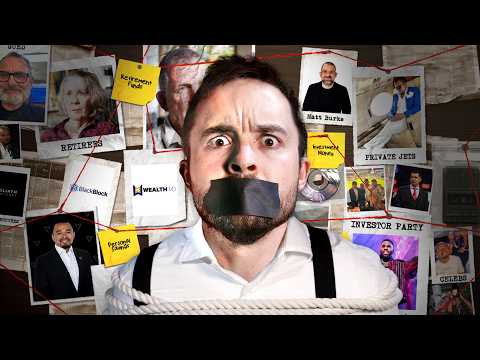
The Goliath Ventures case is a stark reminder that the guru economy is not just about selling courses — it's about selling the idea of wealth, and that idea can be weaponized on an industrial scale. The same psychological tactics used to sell a $30,000 coaching program are used to sell a $50,000 investment in a Ponzi scheme. The only difference is the price tag and the legal consequences.
Part VI: The Common Playbook — What All These Scams Share
If you look at the Osaka ring, Dan Lok's empire, Blessing CEO's cancer fraud, the LinkedIn recruiter scams, and the Goliath Ventures Ponzi scheme, you'll notice a strikingly similar playbook:
1. Fabricated Social Proof
Every scam relies on fake evidence of success. The Osaka ring used bought influencer accounts. Dan Lok used a leased mansion. Blessing CEO used forged medical reports. The LinkedIn scammers used fake profiles. The Ponzi scheme used fake returns. If the proof looks too good to be true, it's probably fabricated.
2. Manufactured Urgency
"Only 10 spots left!" "I have months to live!" "Apply within 24 hours!" Urgency bypasses rational thought. It forces you to make a decision before you have time to verify the claims.
3. Exploitation of Authority Bias
The Osaka ring pretended to be established influencers. Dan Lok pretended to be a billionaire. Blessing CEO pretended to be a dying patient. The LinkedIn scammers pretended to be Google recruiters. The scammer always positions themselves as an authority figure — someone you should trust implicitly.
4. The Bait-and-Switch
You're promised one thing (a course, a job, a cure, a return on investment) and you receive another (a generic PDF, a ghosted message, a fake diagnosis, a disappearing act). The initial offer is always the hook; the reality is the switch.
5. The Refusal to Refund
Whether it's a $30,000 coaching program or a $50 processing fee, scammers make it nearly impossible to get your money back. They ignore emails, demand "proof," offer partial refunds with NDAs, or simply disappear.
6. The Legal Threat
When critics speak up, the scammer's lawyers go to work. The goal is not to win a legal argument — it's to silence dissent. This tactic works because most people can't afford a legal battle.
Part VII: The Psychology — Why These Scams Work (Cialdini's Principles)
To understand why these scams are so effective, we need to look at the psychology of persuasion. Dr. Robert Cialdini, in his seminal book Influence: The Psychology of Persuasion, identified six key principles that drive human decision-making. Scammers weaponize every single one:
1. Scarcity
"Only 10 spots left!" "This offer expires tonight!" Scarcity creates a fear of missing out (FOMO). It makes us act quickly, without thinking critically.
2. Social Proof
"Join 50,000 successful students!" "Look at these testimonials!" Social proof tells us that if everyone else is doing it, it must be safe. The Osaka ring's bought accounts are a perfect example of fabricated social proof.
3. Authority
"I'm a billionaire. I've mentored thousands. I've closed millions in deals." Authority bias makes us trust people who appear to have status, expertise, or power. Dan Lok's entire brand is built on this principle.
4. Liking
"I'm just like you. I struggled too. But I found the secret, and now I'm sharing it with you." We are more likely to say yes to people we like. The guru persona is carefully crafted to be relatable, aspirational, and charismatic.
5. Reciprocity
"Here's a free PDF. Here's a free webinar. Now, would you like to buy my course?" Reciprocity makes us feel obligated to return a favor. The free content is a loss leader designed to trigger a sense of indebtedness.
6. Commitment and Consistency
"Once you've bought the $97 course, the $2,000 program seems like a natural next step." We want to be consistent with our past commitments. The upsell funnel exploits this by starting with a small commitment and gradually escalating.
Part VIII: How to Verify — A 10-Step Practical Checklist
Before you hand over your credit card, your personal data, or your trust, run through this checklist. If any step fails, walk away.
Step 1: Reverse Image Search the Guru's Photos
Use Google Images or TinEye to search for the guru's profile picture, mansion photos, or "candid" shots. If the same image appears on a stock photo site or a different person's profile, red flag.
Step 2: Verify the Mansion
Use property records (many are public) or real estate websites to check if the guru actually owns the property they're showing off. If it's a rental or a stock photo, red flag.
Step 3: Check the BBB and Consumer Complaint Sites
Search for the company name + "BBB complaint," "scam," or "refund." Look for patterns: multiple complaints about refunds, high-pressure sales, or false promises. If the BBB rating is F or there are dozens of unresolved complaints, red flag.
Step 4: Watch Coffeezilla's Videos
Coffeezilla has exposed dozens of guru scams. If the person you're researching has been featured in one of his videos, consider that a massive red flag.
Step 5: Ask for Verifiable Proof of Results
If the guru claims to have made millions, ask for audited financial statements, tax returns, or third-party verification. If they refuse or offer only screenshots (which can be faked), red flag.
Step 6: Read the Refund Policy — Carefully
Look for the refund window, the process for requesting a refund, and any conditions (e.g., "must complete 80% of the course"). If the policy is vague, buried in legalese, or requires you to sign an NDA, red flag.
Step 7: Search for "Scam" + the Guru's Name
Google is your friend. Search for "[Guru Name] scam," "[Guru Name] refund," and "[Guru Name] lawsuit." If you find multiple pages of negative results, red flag.
Step 8: Check the LinkedIn Profile of the "Recruiter"
If you're contacted by a recruiter, look at their profile history. How long have they been with the company? Do they have mutual connections? Do they have endorsements from real people? If the profile was created last week and has 500+ connections but zero activity, red flag.
Step 9: Verify Medical Claims with a Third Party
If someone is asking for donations for a medical condition, contact the hospital or clinic directly. Ask for a case number. Check if the fundraising page is on a verified platform like GoFundMe (which has some safeguards) or a random PayPal link. If you can't independently verify the diagnosis, red flag.
Step 10: Trust Your Gut
If something feels off — if the offer seems too good to be true, if the urgency is overwhelming, if the guru is more interested in your credit card than your success — trust your gut. It's probably right.
Frequently Asked Questions
1. How do I know if a course is legitimate or a scam?
Look for verifiable proof of results (audited financials, third-party testimonials), a clear refund policy (with a reasonable window and no NDAs), and a transparent business model (no multi-level upsells). If the course costs more than $1,000 and the guru can't provide basic proof, assume it's a scam.
2. What should I do if I've been scammed?
First, contact your bank or credit card company to initiate a chargeback. Second, report the scam to your local consumer protection agency (e.g., the FTC in the US, the ACCC in Australia, the EFCC in Nigeria). Third, file a complaint with the platform (e.g., LinkedIn, Instagram, YouTube). Fourth, warn others by posting your experience on review sites and social media.
3. Are all "high ticket" sales programs scams?
No, but the industry has a very high concentration of scams because the profit margins are enormous. Legitimate high-ticket sales programs exist, but they are typically run by established companies with a track record, transparent pricing, and a refund policy that doesn't require an act of Congress to execute.
4. How do I spot a fake LinkedIn recruiter?
No legitimate recruiter will ever ask you for money. If they ask for a "processing fee," "background check fee," or any other payment, it's a scam. Also, check the recruiter's profile for red flags: a recent creation date, no mutual connections, and a generic photo.
5. What is the "anonymous and fluid" network model mentioned in the Osaka case?
It's a decentralized fraud structure where individuals buy and sell social media accounts to impersonate influencers. The network is "anonymous" because the participants don't know each other's real identities, and "fluid" because the accounts are constantly being traded. This makes the operation very difficult for law enforcement to dismantle.
6. Can I get a refund from Dan Lok's High Ticket Closer program?
Based on the BBB complaints and Hannah Howell's investigation, it is very difficult. Many students report being ignored, offered partial refunds with NDAs, or threatened with legal action. Your best bet is to initiate a chargeback with your credit card company and file a complaint with the FTC.
The Bottom Line
June 10–11, 2026, was a watershed moment for consumer protection in the digital age. The Osaka arrests, the Dan Lok exposé, the Blessing CEO arraignment, and the LinkedIn scam crackdown all point to a global awakening. Law enforcement is finally catching up to the scale of the problem, and journalists like Hannah Howell and Coffeezilla are shining a light into the darkest corners of the guru economy.
But the fight is far from over. The "anonymous and fluid" network model is replicating faster than authorities can shut it down. The emotional manipulation of cancer fraud will continue as long as people are willing to exploit compassion. And the high-ticket coaching industry will keep minting new gurus as long as there are desperate people willing to pay for a dream.
Your best defense is skepticism. Not cynicism — skepticism. The willingness to ask questions, to verify claims, and to walk away when something feels wrong. The gurus are counting on you to be too polite, too hopeful, or too lazy to do the research. Don't be.
Learn to Detect These Tactics Before They Cost You
At Larpable, we believe in two things: detecting the fakes and creating a better, more honest entrepreneurial ecosystem. The tactics used by the Osaka ring, Dan Lok, Blessing CEO, and the LinkedIn scammers are not unique — they are part of a pattern that repeats across the entire guru economy. Once you learn to see the pattern, you can't unsee it.
Ready to go deeper? Check out our other resources:
- The 2026 Guide to Spotting Fake Gurus: Your Alternatives to Getting Scammed
- The 2026 Guide to Spotting Fake Revenue Screenshots: Your Toolkit for Exposing Larper Metrics
- How to Verify Revenue Screenshots
- Entrepreneurship Hub
- Startup Hub