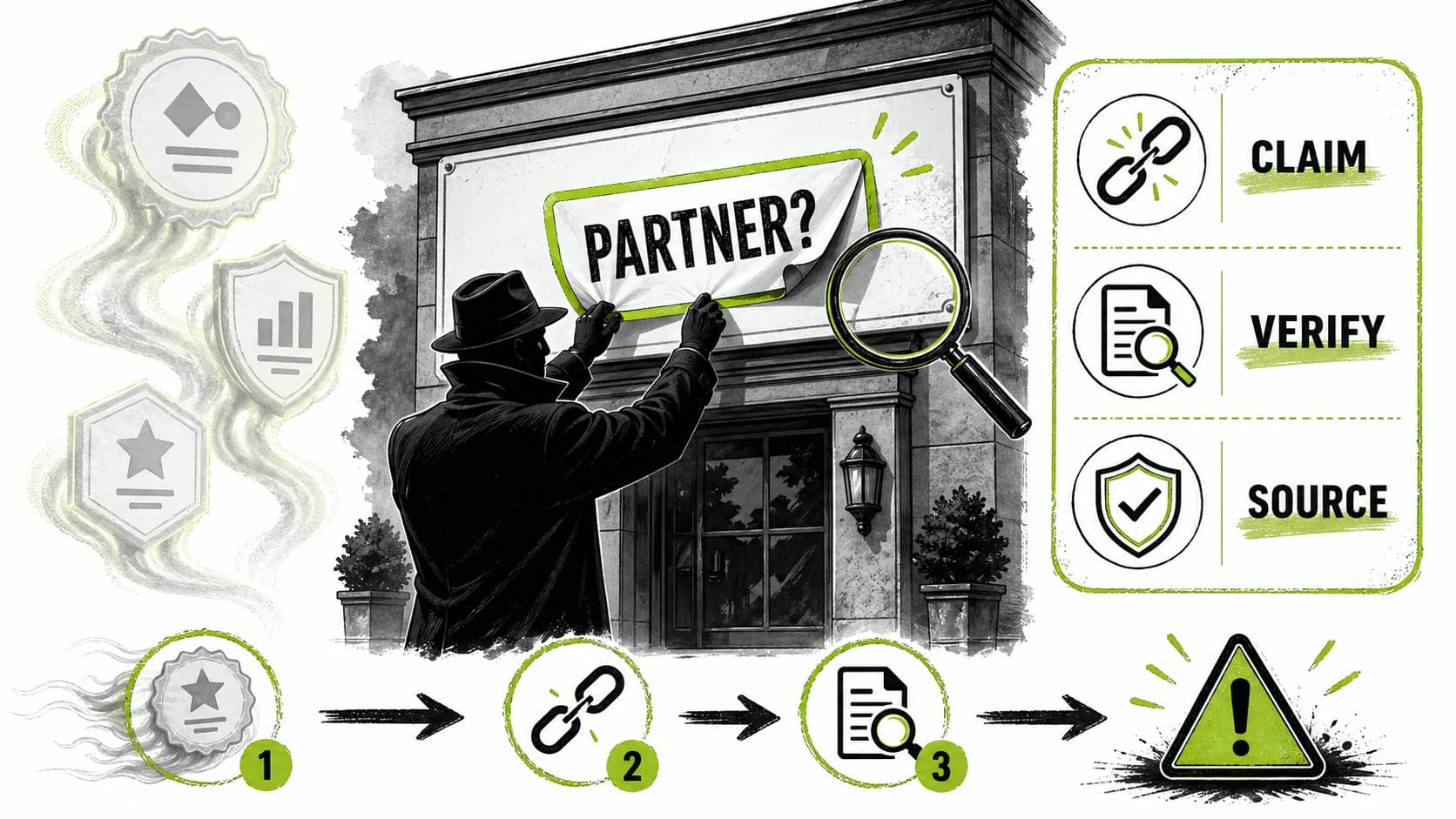
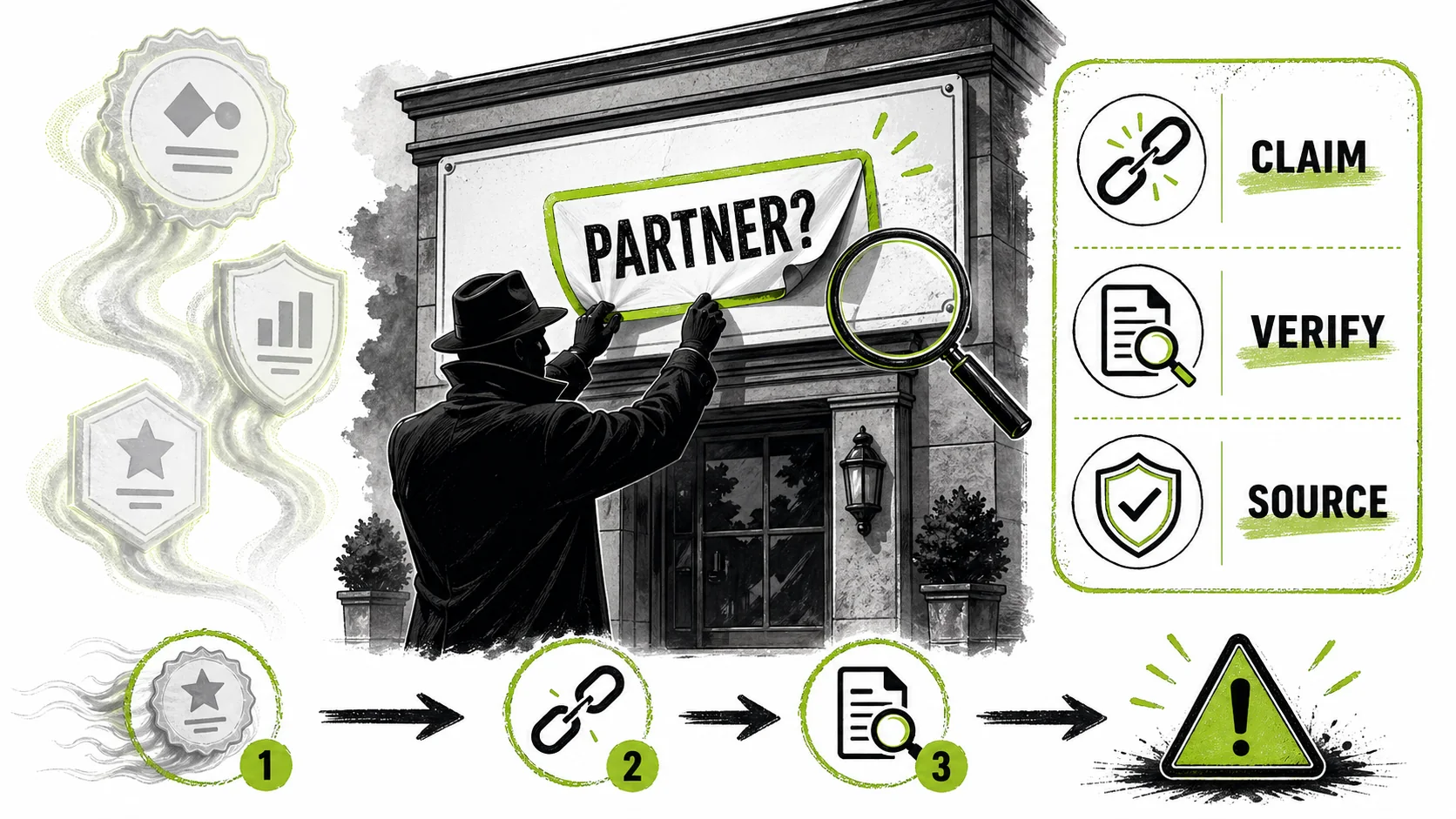
You’re scrolling through LinkedIn, and a post catches your eye. A "growth hacker" you’ve been following just announced a "strategic partnership" with a major AI company. Their profile is now adorned with a shiny "OpenAI Certified Partner" badge. Their latest course, "Mastering AI for Business," promises exclusive access to beta tools and "partner-level" insights. It feels like a shortcut to legitimacy, a golden ticket stamped by a name you trust. But what if that stamp is a forgery?
Welcome to the phantom partnership scam, the 2026 grifter's favorite tool for manufacturing credibility out of thin air. This isn't about vague "collaborations" or loose affiliations. It's a precise, calculated fraud where fake gurus and larper-entrepreneurs fabricate official-sounding relationships with real, respected companies. They hijack logos, invent certification programs, and weave elaborate narratives of insider access—all to sell you a dream that dissolves upon contact. The recent public warnings from OpenAI, Anthropic, and others have ripped back the curtain, revealing an entire ecosystem of credibility laundering. This article is your decoder ring. We'll dissect how these scams work, show you the five undeniable red flags, and give you the tools to verify any partnership claim in under three minutes. Your trust is the target; let's build better defenses.
What Is a Phantom Partnership Scam?
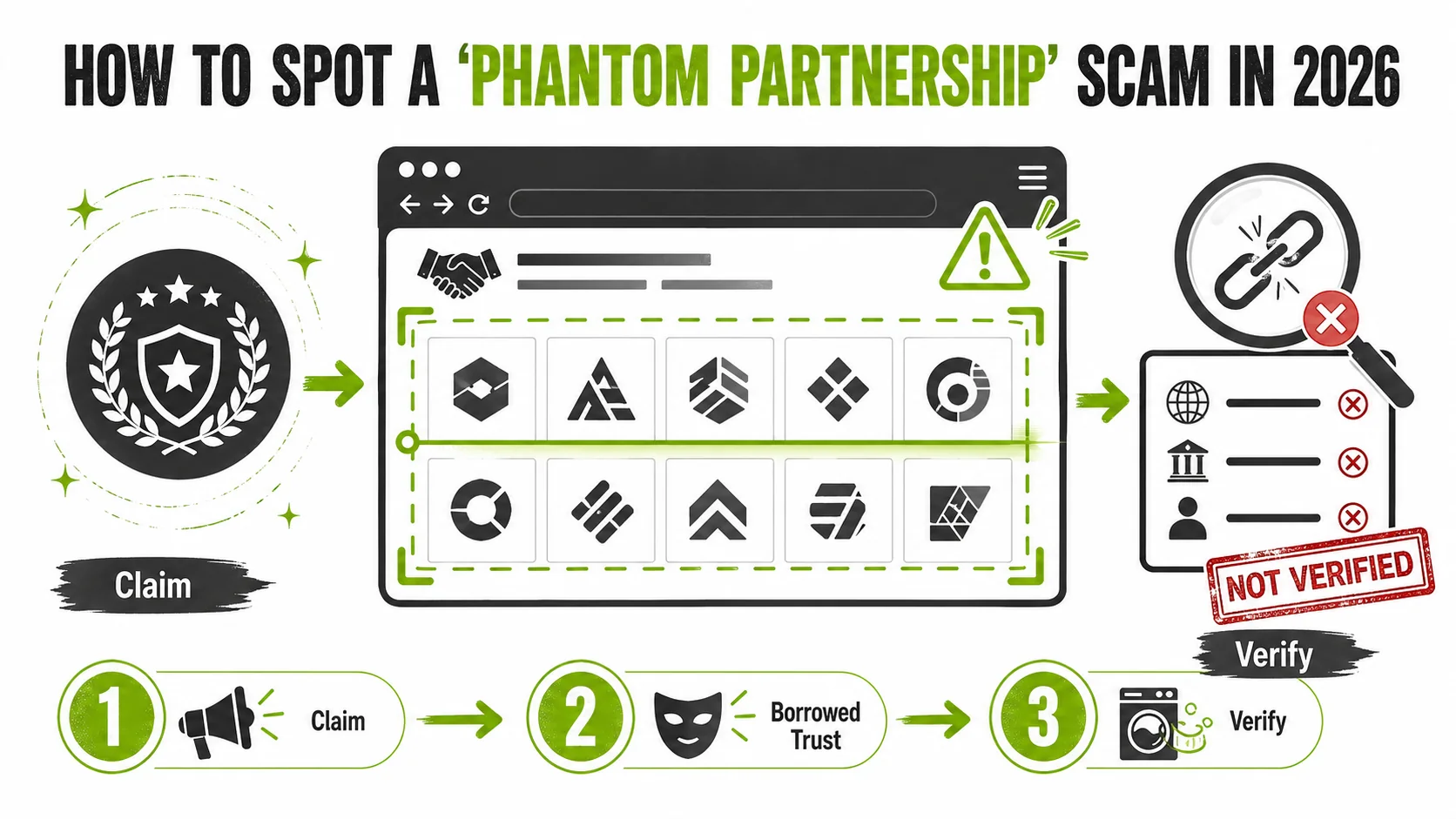
At its core, a phantom partnership is a credibility prop. A scammer asserts a formal business relationship with a well-known company—a partnership, certification, or official reseller status—that does not exist. The goal is to borrow the established company's reputation (the "halo effect") to instantly validate their own dubious offering, whether it's a $2,000 course, "high-ticket" coaching, or a sketchy SaaS tool.
The scam has evolved from simple logo theft to sophisticated narrative-building. In 2024, you might have seen a random logo on a website footer. In 2026, you're presented with a full story: "After our accelerator was selected for the Anthropic Partner Network, we gained early model access which forms the core of Module 3." The lie is wrapped in plausible detail.
The mechanism relies on a asymmetry of verification. The target company (like OpenAI) has a formal, often private, partner program with strict criteria. The scammer operates in the public, noisy space of social media and sales pages, where few bother to check. They exploit the gap between a corporation's internal legal processes and the speed of online perception.
| Aspect | Legitimate Partnership | Phantom Partnership |
|---|---|---|
| Verification | Listed on both companies' official partner directories. | Claimed only by the guru; absent from the major company's site. |
| Proof Offered | Case studies, joint press releases, co-branded materials. | Vague testimonials, self-issued "badges," screenshots of emails. |
| Specificity | Names specific joint offerings, solutions, or support channels. | Uses broad, buzzword-laden language ("strategic alignment," "ecosystem collaboration"). |
| Contact Path | Directs you to a shared resource or a verified contact at the partner firm. | Always funnels you back to the guru's own landing page or calendar link. |
| Legal Footing | Governed by a mutually signed agreement with clear terms. | Relies on trademark infringement and hopes the real company won't issue a DMCA takedown. |
The Anatomy of the Grift
The scam typically unfolds in three acts. First, logo acquisition and fabrication. This can be as crude as right-clicking and saving a logo from Google, or as elaborate as creating a fake "Certified Expert" badge using a company's color scheme and font. Tools like Canva or even advanced AI image generators have made this frighteningly easy.
Second, narrative integration. The fake badge or partnership claim isn't left in isolation. It's woven into the guru's origin story. It becomes the reason they have "secret knowledge," the justification for their premium pricing, and the answer to any skepticism. "Why should you listen to me about AI? Because I'm an official partner, that's why." This narrative is repeated across all profiles: LinkedIn headline, Twitter bio, Instagram highlights, website header.
Third, monetization. The manufactured credibility has one job: to lower your resistance to buying. It's used to justify a "partner-only" workshop, a "certification" program they offer (which is itself a scam), or to add perceived value to a generic course. The partnership isn't the product; it's the glitter on the package that makes the empty box inside seem valuable.
Why "Phantom"?
The term "phantom" is precise. These partnerships have no substance. You cannot interact with them, verify them through normal channels, or derive any actual benefit from them beyond the initial misleading impression. They exist only as a visual and rhetorical construct, a ghost meant to haunt your decision-making process with false authority. When you try to touch them, to test them, your hand passes right through. The recent crackdowns show these phantoms vanish quickly when exposed to the light of a corporate legal team, as detailed in our analysis of the AI-powered guru rebrand happening right now.
Why Phantom Partnerships Are the #1 Credibility Threat in 2026
You might think you're too smart to fall for a fake logo. But this scam works because it attacks a fundamental, rational shortcut our brains use: social proof. When we're uncertain, we look to the choices and endorsements of others, especially authoritative others. A partnership with Google Cloud isn't just a logo; it's a signal that says, "Smart people with rigorous standards have vetted this person." The scammer installs a malicious piece of code in that cognitive shortcut.
The problem has reached epidemic levels for two converging reasons. First, the explosion of complex, hard-to-verify tech. In the AI space specifically, the technology moves faster than public understanding. What does an "OpenAI Partner" even do? Most people don't know, making the claim harder to fact-check. When the product is intangible expertise, a stolen badge becomes the primary "feature."
Second, platform algorithms reward perceived authority. LinkedIn's algorithm promotes content from profiles flaunting "Top Voice" badges or prestigious job titles. A self-appointed "Microsoft for Startups Partner" gets that same algorithmic boost. The scammer leverages the platform's own credibility signals against its users. This creates a dangerous feedback loop where the more brazen the false claim, the wider the reach.
The Real-World Damage
This isn't a victimless, white-lie marketing tactic. Real people lose real money. They enroll in "partner-certified" courses that teach outdated or generic information available for free. They buy "partner-exclusive" software that is just a white-labeled, buggy tool. They make business decisions based on assumed access to technology or networks that the guru simply does not have.
Beyond the financial loss, there's a corrosive effect on the entire entrepreneurial ecosystem. It erodes trust in genuine partnerships. It forces legitimate companies to spend resources on legal "brand police" operations instead of innovation. It drowns out the signal of real experts with the noise of confident frauds. For every aspiring founder who gets scammed, the path to legitimate growth becomes that much harder to see.
The urgency to develop this skill isn't just about protecting your wallet this once. It's about rebuilding your foundational ability to assess credibility in a digital world where evidence can be fabricated with a few clicks. Learning to spot fake revenue screenshots was the first lesson in financial skepticism; this is the masterclass in institutional skepticism. When the grifters learned they could no longer easily fake their own numbers, they started faking their friends. And their new "friends" are the most powerful companies in the world.
How to Spot a Phantom Partnership: A 5-Step Verification Protocol
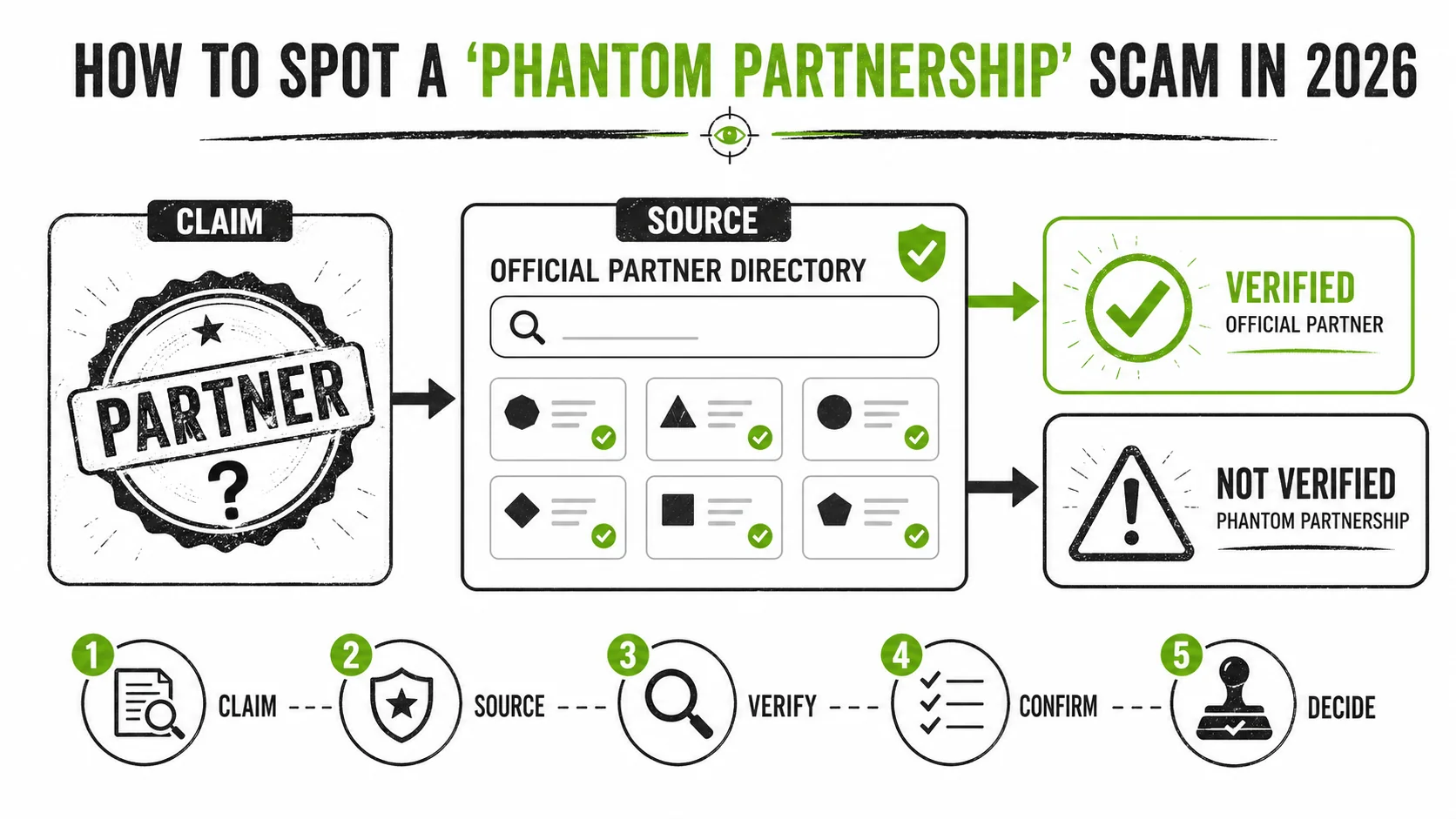
You don't need to be a private investigator. Spotting a phantom partnership is a systematic process of checking claims against primary sources. Follow this protocol every time you see a partnership badge, especially if it's a key reason you're considering buying something.
Step 1: The Primary Source Check (The 60-Second Rule)
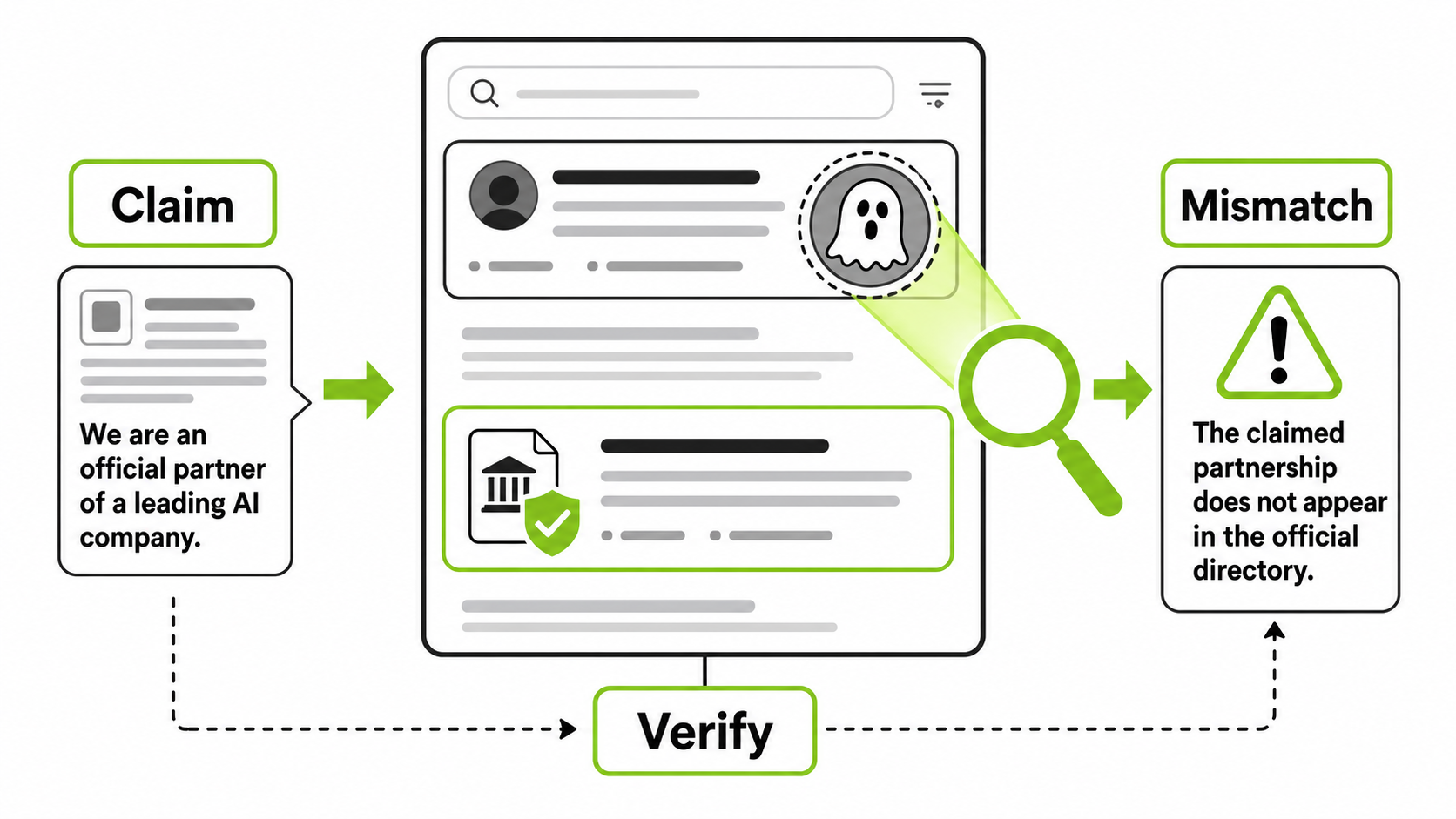
This is the single most important step. Do not trust the guru's website. Go directly to the source company's official partner or network page.
- Where to look: Search "[Company Name] partner program" or "[Company Name] partner directory." For example, "Google Cloud Partner Directory," "Microsoft Partner Center," "AWS Partner Network," "OpenAI Partners," "Anthropic Partner Network."
- The verdict: If they are not listed in the official directory, the partnership is 99.9% fake. Legitimate partnerships are a two-way street; both parties publicly acknowledge them. No legitimate company lets a partner shout from the rooftops without listing them in their own partner portal.
Tool Tip: Use a browser extension like Wayback Machine (archive.org) to check if the guru's claim is new. Sometimes scammers will post a badge, capture screenshots for social proof, and then remove it after a few weeks before a takedown notice hits. The archive can prove the badge was ever there.
Step 2: Interrogate the Specifics of the Claim
Legitimate partnerships have details. Phantom partnerships are allergic to them. Start asking precise questions, either by scrutinizing their public materials or, if you're in a sales call, directly.
- "What is the exact name of the partner program you're in?" (e.g., "Google Cloud Build Partner," "AWS Advanced Tier Services Partner," "OpenAI API Reseller").
- "What specific benefits or resources does this give your clients?" (e.g., "We can provision dedicated Azure instances," "We have a direct technical support channel," "We get allocated compute credits we can distribute").
- "Can you share the joint solution brief or case study?" Real partners create co-branded collateral.
A phantom partner will deflect. They'll use more vague, grandiose language: "We're in a strategic ecosystem partnership focused on synergies." They'll pivot back to their product. They might even get defensive, questioning why you'd ask. That's your red flag siren. This interrogation is a core part of decoding a fake founder's vulnerability script—they have a prepared story for doubt, but it crumbles under specific, factual pressure.
Step 3: Reverse Image Search the "Badge" or Logo
That shiny "Official Partner" badge on their website? It's probably a digital artifact.
What are you looking for?
- Multiple Sources: Does the same exact badge appear on dozens of other unrelated, low-quality websites? It's likely a template or a bought asset pack.
- Metadata Clues: Sometimes you can find the original badge design and see it's been crudely edited.
Step 4: Check for the Paper Trail (or Lack Thereof)
Real business partnerships generate a public record. They are announced.
- Press Releases: Search the news. "[Guru's Company] partners with [Big Tech Company]." A legitimate partnership of any significance will usually have a press release on sites like PRNewswire, Business Wire, or at least on the company's news blog. Its absence is telling.
- Social Media Cross-Pollination: Do the official social media accounts of the alleged partner company ever mention, tag, or share content from this guru? Almost never for phantom partners. Check the "likes" and "retweets" of the guru's announcement post. Are any employees or the official account from the partner company engaging? No? That's a silent alarm.
Step 5: Apply the "Why Them?" Common Sense Test
This is the final gut-check. Put yourself in the shoes of the partner company's business development team.
- Scale Mismatch: Is this a multi-trillion dollar corporation like Microsoft partnering with a solo "guru" whose only product is a $499 course? Global partner programs typically work with other businesses (agencies, consultancies, software developers) that have teams, client portfolios, and revenue that justifies the administrative overhead of a partnership.
Mastering these five steps turns you from a passive consumer of claims into an active auditor of credibility. It's the essential skill for navigating the modern startup landscape, where perception is so often weaponized. This process doesn't just expose phantom partnerships; it builds a mental framework for verifying any extraordinary claim.
Proven Strategies to Expose and Counter the Partnership Grift
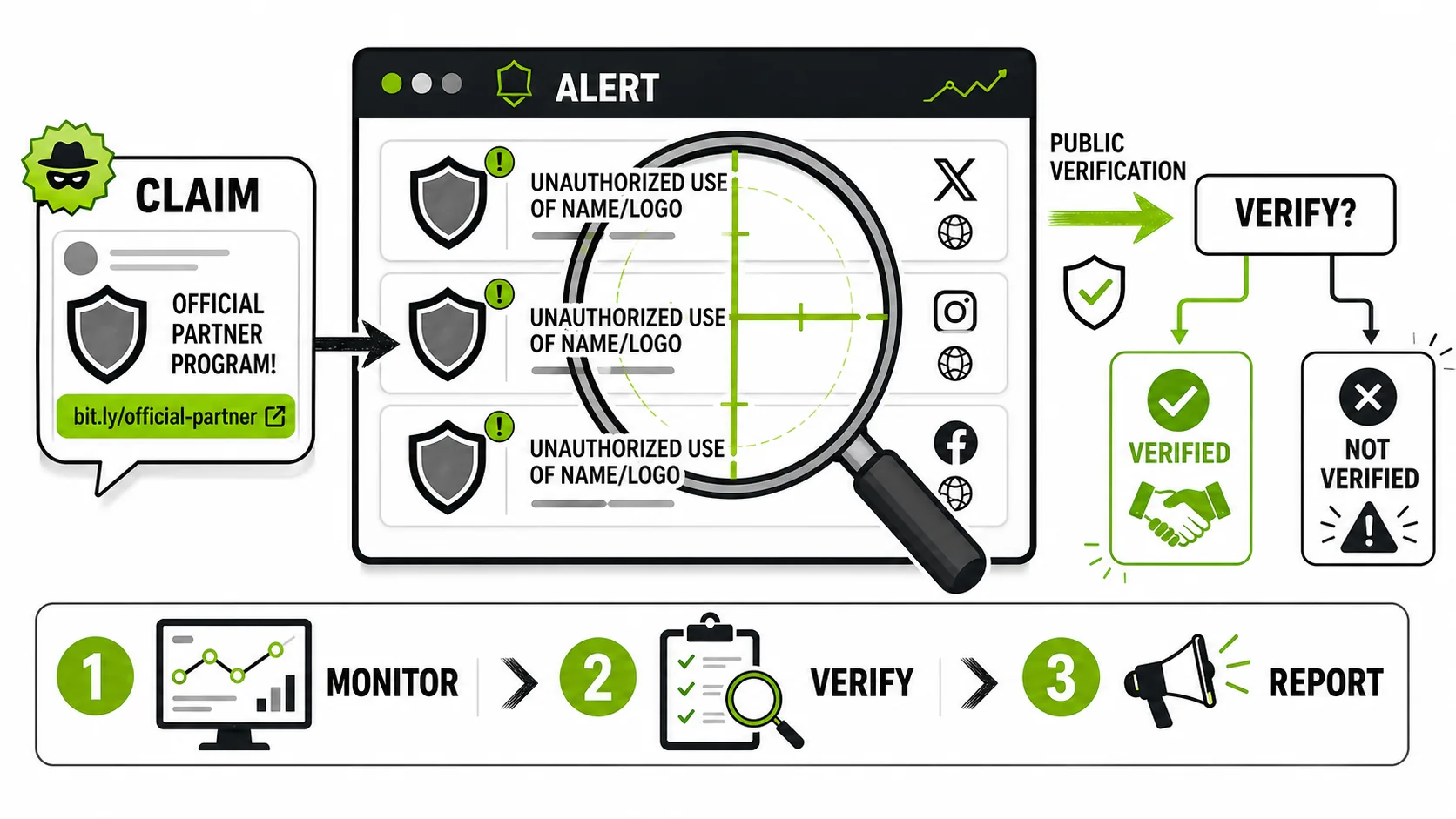
Knowing how to spot the scam is defense. Knowing how to expose it and protect others is offense. Here are advanced tactics that move beyond personal protection to community defense.
Strategy 1: Master Public Verification Calls
When you identify a likely phantom partnership, your private knowledge helps you, but public exposure can help hundreds of others. A "verification call" is a polite, public request for evidence, designed to be seen by the scammer's audience.
- How it works: On the social media post where the partnership is announced (e.g., a LinkedIn post), comment with a specific, evidence-based question. Do not accuse. Ask.
- The Script: "This is exciting! To help clarify for the community, could you link to the listing on the official [Company Name] partner directory? I checked [link to official directory] but couldn't find [Your Company Name]. Want to make sure I'm looking in the right place!"
- Why it works: It forces the claim into the open. Other potential victims see the question. The scammer now has three bad options: 1) Ignore it (which looks suspicious), 2) Delete it (which is an admission of guilt to those who saw it), or 3) Try to fabricate a response, which you can then dismantle with Step 1 of the verification protocol. This public pressure is often enough to make them quietly remove the claim.
Strategy 2: Leverage Official Reporting Channels
Major tech companies are increasingly aware of this problem and have set up channels to report trademark and logo misuse. You are not a vigilante; you are a helpful citizen pointing out a crime in progress.
- Find the Report Form: Search "[Company Name] trademark infringement report" or "[Company Name] report unauthorized partner." Most have a dedicated page. For example, Google, Microsoft, and Apple have clear online forms.
- What to Provide: Submit the URL of the page with the fake badge, a screenshot, and a brief explanation: "This individual/company is claiming to be an official [Company Name] partner and using your logo to lend credibility to their sales page. They are not listed in your official partner directory."
- The Result: These companies have legal teams whose job is to protect their brand. They will issue a DMCA takedown notice to the host of the website. The page, or often the entire site, will be taken down. Your one report can dismantle a scammer's primary asset. This collective vigilance is what makes the ecosystem safer, a principle we explore in our broader entrepreneurship hub.
Strategy 3: Decode the Linguistic Tells
Phantom partners develop a shared vocabulary to sound legitimate while remaining non-committal. Learn their language.
- "We work with..." instead of "We are partners with..." (Extremely vague).
- "Certified by..." when the "certification" is a 45-minute online quiz they created themselves.
- "Selected for..." a non-existent "accelerator" or "network."
- "Powered by..." (They use the company's API, like everyone else. This is not a partnership.)
- "In the... ecosystem" (Meaningless buzzword).
When you see this language, treat it as a semantic red flag. Demand the specific program name and the verifiable proof. This linguistic analysis is a natural extension of learning to spot a synthetic founder, as both grifts rely on constructing a believable but false identity using curated language and symbols.
Strategy 4: Build a "Trust but Verify" Habit for All Social Proof
Extend the partnership verification protocol to other forms of social proof.
"Featured in Forbes": Is it a Forbes Council* post (a paid, user-generated platform) or an actual Forbes.com article written by a staff journalist? Big difference.
- "Advised by [Famous Person]": Does the famous person's official website or LinkedIn list this advisory role? Or is it based on one informal conversation?
- "Used by teams at [Big Company]": Does a single employee at that company use their personal subscription? Or is there an enterprise contract?
Make "Show me the primary source" your default setting. This habit is the ultimate defense against not just partnership scams, but the entire spectrum of credibility grifts.
Got Questions About Phantom Partnerships? We've Got Answers
How can a big company not know someone is falsely using their logo?
They often do know, but there's a lag. A global corporation might have thousands of instances of logo misuse to chase. They rely on automated crawlers and user reports (like the one in Strategy 2). The scammer is betting on the gap between posting the fake badge and receiving the takedown notice—a gap that might be long enough to run a full marketing campaign and make significant money. The February 2026 crackdowns show the lag is shortening as companies get more aggressive.
What if the partnership is real but just not listed yet?
This is the scammer's favorite excuse. It's almost never true. Official partner onboarding for major tech companies is a months-long process involving legal agreements, technical audits, and training. The public listing on the partner directory is a final, deliberate step. It would not go live after an individual partner starts publicly marketing it. The sequence is backward. If they claim it's "pending," ask for the name of their partner manager or the agreement number. You'll get radio silence.
Aren't affiliate programs a type of partnership? Can't they use the logo for that?
This is the key distinction grifters blur. An affiliate program is a performance-based marketing arrangement. You get a unique link, you refer customers, you get a commission. Affiliates are not partners. The terms of service for affiliate programs (like Amazon Associates) often strictly forbid implying a partnership, endorsement, or special status. Using a company's logo as an affiliate is usually a violation. True partnerships involve deeper integration, co-selling, shared roadmaps, and are not primarily about referral fees.
What's the biggest mistake people make when evaluating these claims?
Passivity. The biggest mistake is taking the claim at face value because it's presented confidently on a professional-looking website or social media profile. We're conditioned to trust polished presentation. The antidote is a simple, 60-second active check: the primary source verification. Not doing that check, due to excitement, trust, or laziness, is what opens the door to the scam every single time.
Ready to see through the credibility smokescreen?
Larpable - Detect or Create helps you dissect the tactics of fake gurus and larper-entrepreneurs, from phantom partnerships to fabricated metrics. Stop wondering if that badge is real and start knowing. Apprendre à Détecter and build your immunity to the grift.
<!-- sister-projects-start -->
Other Doved Studio projects
Related tools from the same studio you might find useful:
- Ralphable: Generate structured Claude Code skills that iterate until pass/fail criteria are met.
- Doved Studio: Studio indie derrière cette app et une dizaine d'autres outils.
<!-- sister-projects-end -->